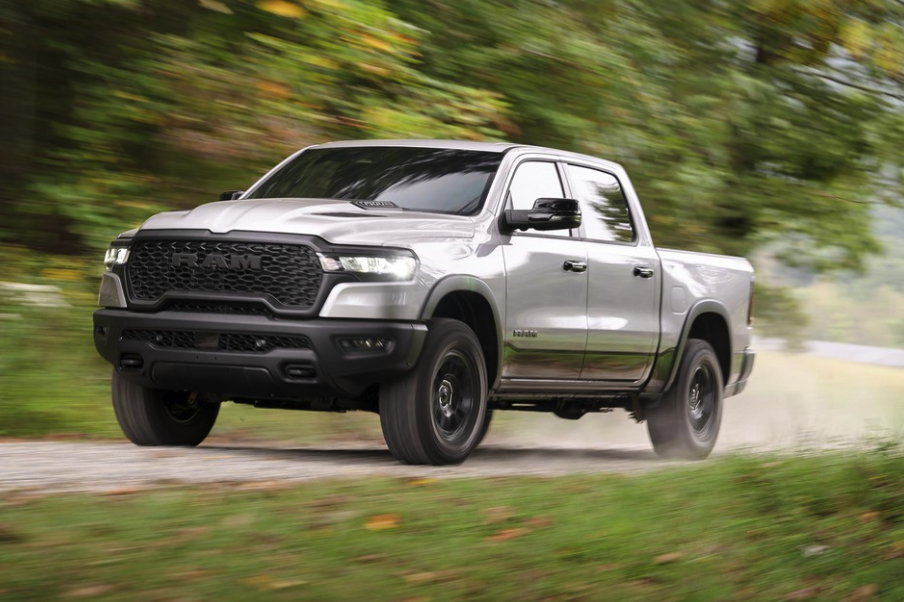
Quick Answer: 2026 Ram 1500 vs Toyota Tundra — Which Should You Choose?
For Alberta drivers who prioritize proven long-term reliability and lower unscheduled maintenance costs, the Toyota Tundra delivers Toyota's legendary dependability and a strong standard hybrid powertrain. But for anyone who wants more powertrain choice, a more refined interior, superior ride comfort, and the best highway efficiency in the full-size segment — the 2026 Ram 1500 is the stronger choice. Ram leads in maximum towing (12,750 lbs vs 12,000 lbs), payload capacity (2,300 lbs vs 1,940 lbs), and cabin refinement, while the EcoDiesel is the most efficient full-size truck engine available for Alberta's long highway drives. The Tundra counters with Toyota's unmatched long-term reliability record, strong resale value, and the highest torque output of any engine in this comparison via the i-FORCE MAX hybrid. Both are excellent full-size trucks — the right choice comes down to how you work and drive.
Key Takeaways
- The Ram 1500 offers three distinct engine choices; the Tundra uses a single twin-turbo V6 in standard or hybrid configuration
- Ram leads in maximum payload capacity (2,300 lbs vs 1,940 lbs) and offers a slightly higher max towing figure (12,750 lbs vs 12,000 lbs)
- The Tundra i-FORCE MAX hybrid produces the highest torque of any engine in this comparison at 583 lb-ft
- Ram's interior is widely regarded as the more refined of the two — the Tundra prioritises rugged durability over luxury
- Toyota has the stronger reliability track record; Ram has closed the gap significantly on the current generation
- Tundras historically hold resale value better; Ram offers more trim flexibility and frequent purchase incentives
- The Ram EcoDiesel achieves ~8.1 L/100km highway — the best highway efficiency of any full-size truck engine in this comparison
- St. Albert Dodge offers test drives of the 2026 Ram 1500 in multiple trims. Call 587-742-9181 to book yours.
Two of Alberta's most popular full-size trucks face off in 2026 — and the comparison runs deeper than most buyers expect. The 2026 Ram 1500 leads with powertrain variety, interior refinement, and a coil-spring suspension that remains unique in the segment. The Toyota Tundra counters with decades of proven reliability, a strong twin-turbo V6 platform, and Toyota's reputation for low unscheduled maintenance costs over the long haul.
This comparison matters for Edmonton-area shoppers because these two trucks serve fundamentally different priorities. If you're weighing your options between the Ram 1500 at St. Albert Dodge — located at 1155 St. Albert Trail — and a Tundra at the Toyota store, this guide gives you the complete picture: engines, towing, fuel economy, interior quality, off-road capability, reliability, and which buyer each truck truly suits. Call us at 587-742-9181 any time.
The 2026 Full-Size Truck Landscape: Why This Comparison Matters
Full-size trucks are the best-selling vehicle category in Alberta, and for good reason. They carry work loads, tow trailers, handle winter roads, and spend long hours on the highway between Edmonton and points across the province. The Ram 1500 and Toyota Tundra both answer this brief — but with different philosophies, different engineering choices, and different trade-offs that matter depending on how you actually use your truck.
The Tundra has built its Alberta following on Toyota's reliability reputation. Many owners report 300,000 km and beyond with routine maintenance only — a track record that commands genuine respect. Toyota's conservative engineering approach, standardised around a single twin-turbo V6 platform, prioritises proven durability over maximum spec-sheet performance.
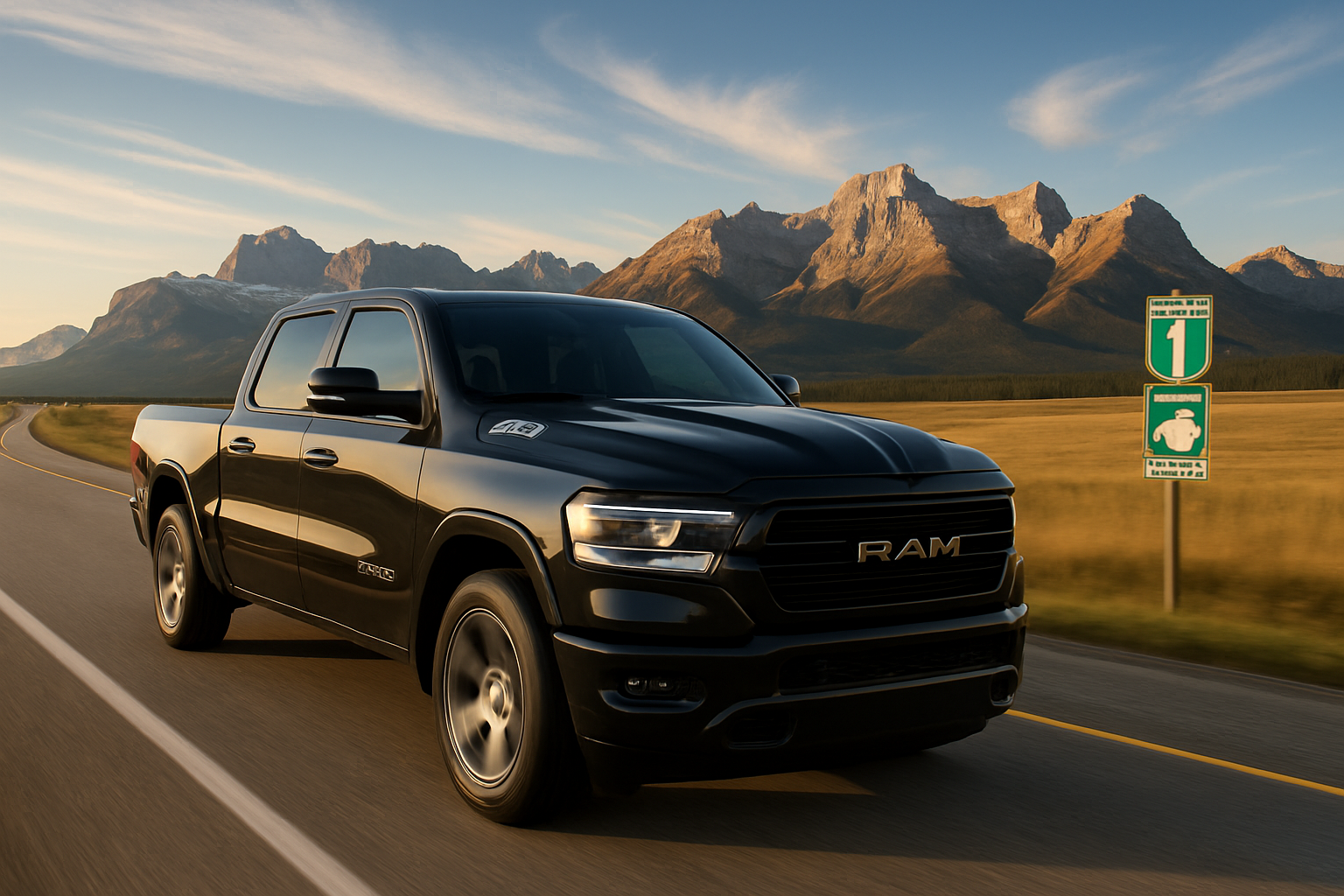
The Ram 1500's case is built on breadth and refinement. Three engine options give Alberta buyers a meaningful choice — from the efficient EcoDiesel to the proven HEMI V8 with cold-weather eTorque assist. The coil-spring suspension — still unique in the full-size segment — delivers a car-like ride quality on highway runs between St. Albert and Calgary that leaf-spring trucks cannot match. And Ram's interior, particularly on Laramie and above trims, sets the standard for cabin quality in the segment.
At St. Albert Dodge, we help Alberta buyers make this call every week. The honest answer is that neither truck is objectively better — but one is almost certainly better for your specific situation. Here is what you need to know.
Engine Options and Powertrain Comparison
Ram's multi-engine strategy gives buyers meaningful choice. Toyota's focused approach standardises on one platform with the option to add hybrid capability.
2026 Ram 1500 Engines
The 3.6L Pentastar V6 (305 hp / 269 lb-ft) is the accessible entry point — smooth, well-mannered, and paired with an 8-speed automatic. Best suited to commuters and light-duty buyers who rarely tow.
The 5.7L HEMI V8 with eTorque (395 hp / 410 lb-ft) is the most popular choice in Alberta. The mild-hybrid eTorque system provides electric torque assist at low RPM, improving cold-weather starts and reducing wheel spin on icy surfaces. The HEMI's proven cold-weather reliability is a major draw for St. Albert and Edmonton drivers.
The 3.0L EcoDiesel V6 (260 hp / 480 lb-ft) is Ram's efficiency leader — best highway fuel consumption of any engine in this comparison and outstanding towing torque. The go-to choice for high-mileage drivers and those covering long Alberta distances regularly.
Toyota Tundra Engines
The 3.5L Twin-Turbo V6 i-FORCE (389 hp / 479 lb-ft) is Tundra's standard engine. The twin-turbo setup delivers strong low-RPM torque and competitive towing without hybrid complexity.
The 3.5L Twin-Turbo V6 i-FORCE MAX Hybrid (437 hp / 583 lb-ft) integrates an electric motor into the transmission for the highest combined output of any engine in this comparison. The electric assist is most impactful in city driving and during towing launches — it pulls away from a stop with exceptional authority. Highway efficiency improvements over the non-hybrid are more modest.
| Engine | Power | Torque (lb-ft) | Best For |
|---|---|---|---|
| Ram 3.6L V6 | 305 hp | 269 lb-ft | Daily driving, light duty |
| Ram 5.7L HEMI V8 + eTorque | 395 hp | 410 lb-ft | Regular towing, cold weather, V8 character |
| Ram 3.0L EcoDiesel V6 | 260 hp | 480 lb-ft | Long-distance efficiency, heavy towing |
| Tundra 3.5L Twin-Turbo V6 | 389 hp | 479 lb-ft | Balanced performance, proven simplicity |
| Tundra i-FORCE MAX Hybrid | 437 hp | 583 lb-ft | Maximum torque, city efficiency, towing launches |
For Alberta winter driving, Ram's HEMI with eTorque provides a meaningful advantage — the electric assist reduces wheel spin on icy starts and warms the cabin faster. The EcoDiesel requires a block heater and proper winter diesel fuel but rewards with outstanding towing torque once warm. The Tundra's twin-turbo engines are reliable in cold weather, though turbo response can lag slightly at extreme temperatures until oil reaches operating temperature.
Towing Capacity and Payload
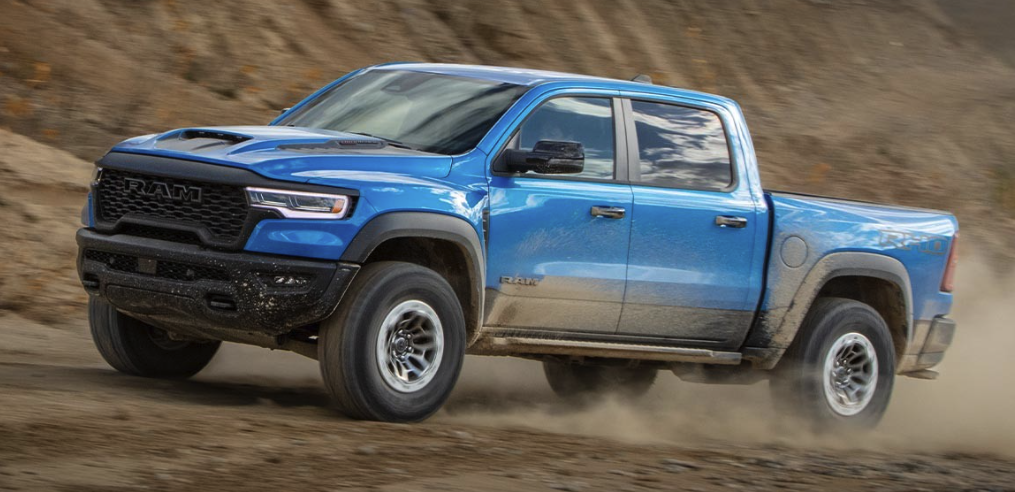
For Alberta buyers who tow — whether a fifth-wheel trailer, a boat, a horse trailer, or construction equipment — this comparison has a clear winner. See our dedicated Ram 1500 towing capacity and payload guide for full configuration details.
| Specification | 2026 Ram 1500 | Toyota Tundra |
|---|---|---|
| Maximum Towing Capacity | 12,750 lbs (5,783 kg) | 12,000 lbs (5,443 kg) |
| Maximum Payload Capacity | 2,300 lbs (1,043 kg) | 1,940 lbs (880 kg) |
| Best Towing Engine | 3.0L EcoDiesel / 5.7L HEMI V8 | i-FORCE MAX Hybrid |
| Rear Suspension | Multi-link coil spring (available air suspension) | Leaf spring |
| Integrated Trailer Brake Controller | Available with package | Included with Tow Package |
The Ram leads on both towing capacity (by 750 lbs) and payload (by 360 lbs / 163 kg). For work truck buyers hauling heavy equipment, construction materials, or livestock near rated limits, those margins matter. For most recreational Alberta users — campers, boats, ATVs — both trucks comfortably cover the load.
The Ram's multi-link coil spring suspension delivers a meaningful real-world advantage when loaded: it absorbs impacts more smoothly than the Tundra's leaf springs and reduces trailer sway in the crosswinds common on Highway 2 between Edmonton and Calgary. The available Active-Level Four-Corner Air Suspension automatically adjusts ride height as weight is added, keeping headlights aimed correctly and reducing the porpoising effect on long loaded highway runs.
The Tundra i-FORCE MAX hybrid system's 583 lb-ft of torque makes it the stronger engine for pulling away from a stop — particularly on inclines or when launching from icy boat launches. Toyota's Trailer Backup Guide assists with reversing, and trailer sway control is standard with the Tow Package.
Fuel Economy
| Engine | City (L/100 km) | Highway (L/100 km) | Best Use Case |
|---|---|---|---|
| Ram 3.6L V6 | 12.4 | 9.0 | Light-duty daily driving |
| Ram 5.7L HEMI V8 + eTorque | 14.7 | 10.3 | Performance and regular towing |
| Ram 3.0L EcoDiesel V6 | 10.7 | 8.1 | Highway-focused and long-distance |
| Tundra 3.5L Twin-Turbo V6 | 13.8 | 11.1 | Balanced performance |
| Tundra i-FORCE MAX Hybrid | 11.8 | 10.2 | City and mixed driving |
Annual Fuel Cost Analysis for Alberta Drivers
The Ram EcoDiesel is the clear highway efficiency leader — 8.1 L/100 km highway vs the Tundra hybrid's 10.2 L/100 km. Over 25,000 km annually, the difference represents approximately $800–$1,200 in fuel savings depending on current diesel vs gasoline pricing in Alberta. For drivers covering Edmonton-to-Calgary distances regularly, the EcoDiesel's 98-litre tank translates to over 1,200 km of highway range between fills.
The Tundra hybrid is the better choice for city-heavy driving — its electric motor assist reduces fuel consumption in stop-and-go traffic in ways the Ram's eTorque mild-hybrid cannot fully match at low speeds.
Canadian winter adds 10–20% to real-world consumption on both platforms. Expect these figures to rise during the November–March period regardless of which truck you choose.
Interior, Comfort, and Technology
Ram 1500 Interior
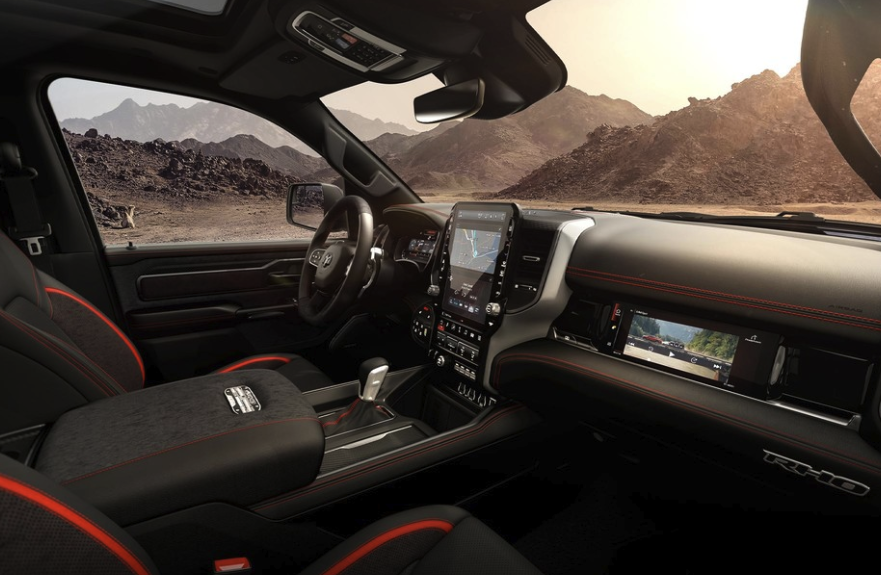
The Ram 1500 has held the interior quality crown in the full-size truck segment for years — and the 2026 model continues that standard. Soft-touch surfaces, genuine leather options, and real wood accents appear across mid-to-upper trims. Class-leading Crew Cab rear legroom (45.0 inches / 114.3 cm) makes long Alberta highway drives genuinely comfortable for five adults.
The Uconnect infotainment system is available with a 12-inch touchscreen and is consistently rated among the best in the truck segment for responsiveness, logical menu structure, and ease of use with gloves. Wireless Apple CarPlay and Android Auto are standard on most trims. Available features include Harman Kardon 19-speaker audio, wireless charging, heated and ventilated seats, and massaging front seats on Limited and Longhorn trims.
Tundra Interior
Toyota's redesigned Tundra interior is a significant improvement over the previous generation but takes a different approach — durable, functional, and easy to clean rather than luxury-focused. Hard plastics feature more prominently on lower trims; upper trims (Limited, Platinum) add leather and softer materials, though they don't match comparable Ram trims in overall refinement. The available 14-inch touchscreen is large and clear, though Toyota's multimedia interface is considered less intuitive than Uconnect by most reviewers. Standard Crew Max rear legroom is competitive but trails the Ram.
One standout Tundra tech feature is the available digital rearview mirror — a camera-fed display that provides an unobstructed view behind the truck when the bed is loaded or when towing.
| Interior Feature | 2026 Ram 1500 | Toyota Tundra |
|---|---|---|
| Max Touchscreen | 12-inch Uconnect | 14-inch available |
| Crew Cab Rear Legroom | 45.0" (114.3 cm) | ~42.3" (107.4 cm) |
| Premium Audio | Harman Kardon 19-speaker | JBL 14-speaker (Premium) |
| Wireless CarPlay/Android Auto | Standard most trims | Available select trims |
| Interior Character | Refined, luxury-adjacent | Rugged, durable, functional |
Off-Road Capability
Both trucks offer dedicated off-road trims that go well beyond appearance packages.
The Ram 1500 Rebel comes with Bilstein off-road shock absorbers, a factory suspension lift, all-terrain tires, heavy-duty skid plates, and an electronic locking rear differential. The coil-spring suspension — unique in the segment — gives the Rebel exceptional on-trail ride quality that leaf-spring trucks can't match. Hill descent control and multiple drive modes round out the package.
The Tundra TRD Pro uses Fox 2.5-inch internal bypass shocks, increased ground clearance, a front skid plate, and reinforced springs. Toyota's Multi-Terrain Select system offers dedicated modes for mud, sand, rock, and snow. Crawl Control — essentially low-speed cruise control for technical terrain — allows the driver to focus entirely on steering while the truck manages throttle and braking.
For Alberta backcountry use, both are genuinely capable. The Rebel's coil suspension absorbs trail impacts more smoothly and behaves more naturally on undulating terrain. The TRD Pro's Crawl Control is a real advantage for technical rock or heavily rutted routes where precise speed management matters.
| Off-Road Feature | Ram 1500 Rebel | Tundra TRD Pro |
|---|---|---|
| Shocks | Bilstein off-road monotube | Fox 2.5" internal bypass |
| Rear Differential | Electronic locking | Mechanical limited-slip |
| Terrain Management | Off-Road mode, multiple selectable | Multi-Terrain Select + Crawl Control |
| Skid Plate Protection | Fuel tank, transfer case, suspension | Front skid plate |
| Suspension Type | Coil spring — smoother trail ride | Leaf spring — more rugged feel |
Winter Performance in Alberta Conditions
Both trucks handle Alberta winters well when equipped with proper winter tires — which we strongly recommend for all drivers regardless of 4WD capability. The Ram's eTorque system provides electric torque assist on icy starts, reducing wheel spin in a way that the Tundra's non-hybrid configuration cannot match. The Ram's coil spring suspension also maintains better ground contact on rutted, icy secondary roads. The Tundra TRD Pro's Multi-Terrain Select Snow mode is effective on loose or packed snow. Both trucks benefit from engine block heaters during Alberta's deep winter — standard equipment for any truck sold in this region.
Reliability, Safety, and Warranty
Reliability
Toyota's Tundra has one of the strongest long-term dependability records in the truck segment — many owners report 300,000+ km with routine maintenance and no major unscheduled repairs. Toyota's conservative engineering approach, avoiding unnecessary complexity, contributes to this track record. Maintenance costs have historically been lower than domestic trucks.
The Ram 1500 has made consistent and documented reliability improvements on the current generation. J.D. Power Initial Quality scores have risen, and owner satisfaction with the platform has improved significantly. The Ram is a dependable truck when properly maintained — but Toyota's long-term track record remains the benchmark in this category.
Safety
Both trucks are well-equipped. Ram includes forward collision warning with automatic emergency braking, electronic stability control, blind-spot monitoring, adaptive cruise control, and an available 360-degree surround-view camera. Ram's available night vision system — thermal imaging that detects pedestrians and animals beyond headlight range — has no Tundra equivalent and is a genuine advantage on rural Alberta roads at night.
Toyota Safety Sense 2.5 comes standard on all Tundra trims: pre-collision warning, lane departure alert, dynamic radar cruise control, and automatic high beams. Higher trims add blind-spot monitoring and the multi-terrain monitor.
Warranty Comparison
| Coverage | 2026 Ram 1500 | Toyota Tundra |
|---|---|---|
| Basic Warranty | 3 years / 60,000 km | 3 years / 60,000 km |
| Powertrain Warranty | 5 years / 100,000 km | 5 years / 100,000 km |
| Rust Perforation | 5 years / 160,000 km | 5 years / unlimited km |
| Roadside Assistance | 5 years / 100,000 km | 3 years / 60,000 km |
| Complimentary Maintenance | Not included | 2 years / 40,000 km |
Ram's roadside assistance coverage is longer. Toyota includes complimentary maintenance for the first two years. Both offer competitive extended warranty options beyond the standard terms.
Pricing and Long-Term Value
Understanding the full cost picture requires looking beyond the sticker. For a detailed breakdown of Ram trim levels and Canadian pricing, see our Ram 1500 trim levels guide.
The Ram 1500 offers more trim flexibility and more frequent manufacturer incentives — making it easier to find a configuration at a price point that works for you. The Tundra has a simpler pricing structure with fewer negotiation variables.
Where Tundra has historically outperformed Ram is resale value. Toyota's reliability reputation keeps used Tundra demand strong, and depreciation rates are among the best in the segment. Ram has been closing this gap, particularly for well-specified trims like the Rebel and Limited.
Over a five-year ownership period, fuel costs favour the Ram EcoDiesel for high-mileage drivers. Maintenance costs have historically favoured the Tundra, though Ram's current-generation reliability improvements have narrowed this gap. Insurance rates are similar for comparable trims. On monthly financing, both trucks occupy a similar price band at comparable trim levels — but Ram's more frequent incentive programs can meaningfully reduce the effective purchase price. Visit our finance centre for current rates and personalized payment calculations.
Complete Head-to-Head Comparison
| Category | Ram 1500 HEMI V8 | Ram EcoDiesel | Tundra Twin-Turbo V6 | Tundra i-FORCE MAX |
|---|---|---|---|---|
| Horsepower | 395 hp | 260 hp | 389 hp | 437 hp |
| Torque | 410 lb-ft | 480 lb-ft | 479 lb-ft | 583 lb-ft |
| Max Towing | 12,750 lbs | 12,560 lbs | 12,000 lbs | 12,000 lbs |
| Max Payload | 2,300 lbs | 1,800 lbs | 1,940 lbs | 1,940 lbs |
| Highway Fuel Economy | 10.3 L/100km | 8.1 L/100km | 11.1 L/100km | 10.2 L/100km |
| Rear Suspension | Multi-link coil spring | Multi-link coil spring | Leaf spring | Leaf spring |
| Powertrain Warranty | 5 yr / 100,000 km | 5 yr / 100,000 km | 5 yr / 100,000 km | 5 yr / 100,000 km |
Where the Ram 1500 Wins
The Ram's advantages are concentrated in capability and comfort: higher maximum towing (12,750 lbs), higher maximum payload (2,300 lbs), the best highway fuel efficiency of any engine in this comparison (EcoDiesel at 8.1 L/100km), class-leading interior refinement, the most rear legroom in the Crew Cab segment, and a coil-spring suspension that delivers a genuinely superior ride on loaded highway runs. The eTorque cold-weather advantage on icy Alberta starts is a real-world benefit that non-hybrid Tundra buyers don't have access to.
Where the Tundra Wins
The Tundra's advantages are concentrated in long-term dependability and resale value: Toyota's decades-long track record of low unscheduled maintenance, 300,000+ km owner reports with routine maintenance only, strong used market demand, and the i-FORCE MAX's best-in-class 583 lb-ft torque for towing launches and stop-and-go heavy hauling. Toyota's complimentary 2-year maintenance package adds immediate ownership value that Ram doesn't match.
Honest Acknowledgment of Trade-Offs
The Ram's HEMI V8 uses more fuel than comparable Tundra configurations. Its long-term reliability, while significantly improved, still trails Toyota's proven track record. The EcoDiesel requires proper winter diesel fuel and a block heater in Alberta's extreme cold. The Tundra's leaf spring suspension delivers a firmer, less refined ride — particularly noticeable on long unloaded highway runs. Its infotainment interface is considered less intuitive than Uconnect by most reviewers. Neither truck is perfect for everyone — both are genuinely excellent for the right buyer.
Which Truck Is Right for Your Needs?
| Buyer Profile | Best Choice | Primary Reason | Key Consideration |
|---|---|---|---|
| High-mileage highway driver (Edmonton to Calgary regularly) | Ram EcoDiesel | 8.1 L/100km highway — best in segment | 1,200+ km range per tank on long Alberta runs |
| Regular tower near rated limits | Ram 1500 HEMI | 12,750 lbs max towing | 750-lb advantage over Tundra's maximum |
| Long-term reliability priority | Tundra | 300,000+ km track record | Toyota's proven low unscheduled maintenance |
| Off-road / backcountry driver | Ram 1500 Rebel | Coil spring suspension, Bilstein shocks | Smoother trail ride than any leaf spring truck |
| Daily commuter — comfort focused | Ram 1500 | Class-leading interior, coil spring ride | 45" rear legroom, Uconnect refinement |
| Maximum torque / heavy trailer launches | Tundra i-FORCE MAX | 583 lb-ft torque | Best off-the-line pulling power in segment |
| Cold-weather Alberta driving | Ram HEMI + eTorque | Electric torque assist on icy starts | Meaningfully reduces wheel spin in winter |
| Budget-conscious with reliability priority | Tundra | Lower long-term maintenance costs | Conservative engineering approach pays off over time |
For most Alberta buyers — particularly those who spend significant time in their trucks commuting between St. Albert and Edmonton, or covering long distances across the province — the Ram 1500 offers the more liveable daily experience without sacrificing capability. The EcoDiesel is the most efficient full-size truck engine available for high-mileage Alberta drivers, and the coil-spring suspension remains a genuine comfort advantage year-round.
If your primary concern is long-term ownership cost certainty and the lowest possible unscheduled maintenance, the Tundra's track record earns its consideration — especially if your towing needs are within its 12,000-lb maximum and city driving makes the i-FORCE MAX hybrid's efficiency an advantage.
Experience Both at St. Albert Dodge
Reading a comparison guide is the start of the decision — not the end. The Ram 1500 and Tundra feel distinctly different to drive and to sit in, and those differences matter more than any spec sheet can capture. The Ram's coil spring ride, its Uconnect responsiveness, the HEMI's V8 character, the EcoDiesel's effortless torque on a loaded highway run — these are felt, not read.
We carry the 2026 Ram 1500 across multiple trims including Tradesman, Big Horn, Rebel, Laramie, and Longhorn configurations. Our team can walk you through test drives in city and highway conditions so you experience real-world differences rather than relying on published numbers. We provide honest, use-case-based guidance — not a push toward whichever vehicle has the best margin.
| Service | What We Offer | Your Benefit |
|---|---|---|
| Test Drives | Multiple Ram 1500 trims including Rebel, Laramie, and EcoDiesel configurations | Experience real-world differences — ride quality, powertrain character, and interior refinement |
| Expert Consultation | Honest discussion of your towing, commuting, and daily driving needs | Personalized guidance matched to how you actually use your truck — not a sales script |
| Inventory Selection | Range of Ram 1500 configurations in stock and incoming | Find your exact trim, engine, colour, and option set |
| Financing Support | Competitive rates, payment modelling, trade-in evaluation | Full financial picture before you decide — including current Ram incentives |
Whether the 2026 Ram 1500 is the right choice for you — or whether a different configuration, a used option, or a different path makes more sense — we'll help you find it. Come see us at 1155 St. Albert Trail, St. Albert, AB T8N7X1, or call 587-742-9181 to schedule your appointment.
FAQ
Which has better towing capacity — the 2026 Ram 1500 or Toyota Tundra?
Is the Toyota Tundra more reliable than the Ram 1500?
How does Ram 1500 fuel economy compare to the Tundra?
Which truck has the better interior — Ram 1500 or Tundra?
Which truck holds its value better in Alberta?
Which truck handles Alberta winters better — the Ram 1500 or the Tundra?
Can I test drive the 2026 Ram 1500 at St. Albert Dodge?
Visit us at St. Albert Dodge located at 1155 St. Albert Trail, St. Albert, AB T8N7X1. Call us at 587-742-9181 for more information.