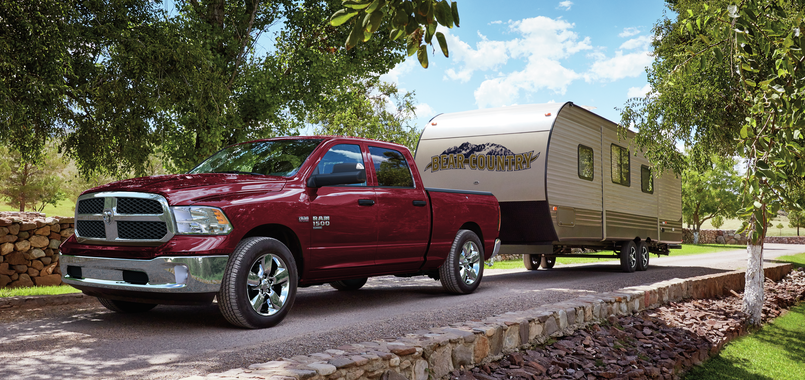
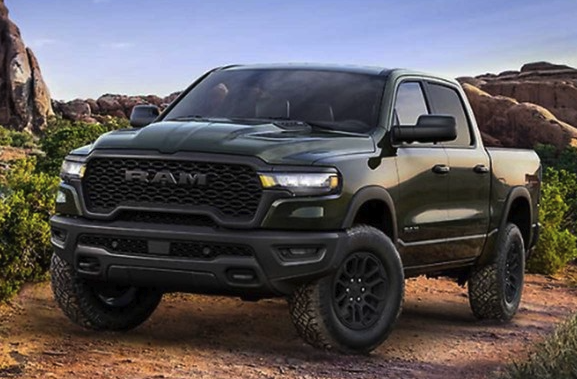
Are you confident your truck can safely handle that heavy trailer or loaded bed on Alberta highways? For Canadian truck buyers, knowing your Ram's true hauling limits is about more than specifications — it's about safety, performance, and choosing the right configuration from the start.
The 2026 Ram 1500 delivers a maximum towing capacity of 11,320 lbs (5,134 kg) when properly equipped with the HEMI V8 engine, and payload capacity up to 2,360 lbs (1,070 kg) depending on configuration. Built on a 98% high-strength steel frame, and available with a broad range of engine and drivetrain options, the Ram 1500 is one of the most capable and configurable half-ton trucks on Canadian roads.
This guide covers towing and payload by engine, trim level, cab style, and bed length — so you know exactly what your truck can do before you hook up. At St. Albert Dodge, located at 1155 St. Albert Trail in St. Albert, AB, our team helps Alberta drivers spec the right Ram for their hauling needs. Call us at 587-742-9181 anytime.
Key Takeaways
- Maximum towing reaches 11,320 lbs (5,134 kg) with the HEMI V8 — suitable for large travel trailers, boats, and heavy work equipment
- Payload capacity tops out at 2,360 lbs (1,070 kg) depending on cab style, bed length, engine, and drivetrain
- The 5.7L HEMI V8 delivers 395 hp and 410 lb-ft of torque for confident, capable towing across Canada
- The 98% high-strength steel frame provides the structural backbone needed for demanding work and recreational use
- Cab style, bed length, drivetrain, axle ratio, and added options all meaningfully affect your truck's actual hauling numbers
- Always check your specific truck's door jamb sticker — it shows the precise payload rating for your exact configuration
Learn more about the 2026 Ram 1500 Overview
Understanding Towing Capacity vs Payload
Two numbers define what your Ram 1500 can do: towing capacity and payload. Many buyers focus only on towing — but payload is often the more practical limit for everyday use.
Towing capacity is the maximum weight your truck can safely pull behind it. This covers trailers, boats, campers, and livestock haulers.
Payload capacity is the maximum weight your truck can carry inside itself. This includes:
- All passengers and their gear
- Cargo in the bed or cabin
- Tools, equipment, and accessories
- Tongue weight from any attached trailer
Here's where buyers get caught out: imagine towing a travel trailer with a 900 lb tongue weight while carrying four passengers and camping gear. That tongue weight and passenger load count against your payload — not your towing capacity. You can hit your payload limit well before you hit your towing limit.
Always calculate both numbers for your intended use before selecting your configuration. The Ram 1500's ratings are impressive, but knowing which limit actually applies to your situation is what keeps you safe and legal on Canadian roads.
Engine Options and Their Towing Impact
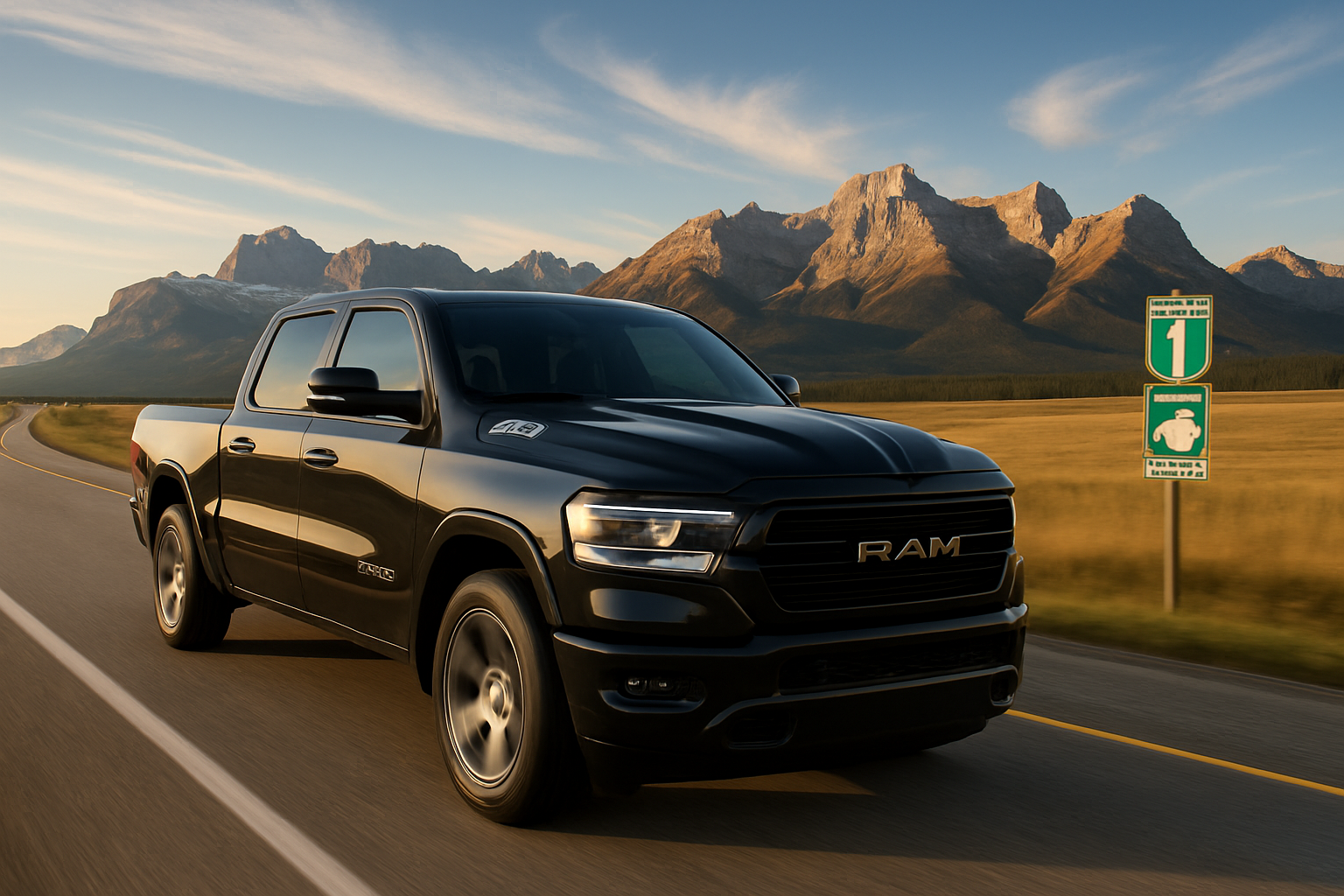
Engine choice has the single largest impact on your Ram 1500's towing capacity. Here's how the 2026 powertrain lineup breaks down:
3.6L Pentastar V6 with eTorque
The base V6 with eTorque mild-hybrid assistance is the most fuel-efficient option in the lineup. It delivers 305 hp and 269 lb-ft of torque — enough for occasional towing of utility trailers, smaller boats, and recreational equipment. In properly equipped configurations, it reaches towing capacity exceeding 10,000 lbs. The eTorque system provides an extra torque boost for highway merging and hill climbing, and improves fuel economy during city driving in St. Albert and Edmonton.
5.7L HEMI V8 with eTorque
The HEMI V8 is the flagship towing engine for Ram 1500 buyers who haul frequently or need maximum capability. With 395 hp and 410 lb-ft of torque, it achieves the Ram 1500's maximum towing rating of 11,320 lbs (5,134 kg) when properly equipped. The responsive throttle and characteristic HEMI sound create a driving experience that inspires confidence when pulling heavy loads across Alberta highways or through the Rockies.
3.0L EcoDiesel V6
The EcoDiesel delivers 260 hp and an impressive 480 lb-ft of torque — more low-end torque than any gasoline option in the lineup. Diesel engines naturally produce peak torque at low RPM, which translates to better sustained towing performance and less drivetrain strain on long grades. Maximum towing reaches 10,560 lbs. For drivers who regularly travel between provinces or tow travel trailers on extended trips, the EcoDiesel's fuel efficiency at highway speeds makes a meaningful difference over the long run.
Hybrid Powertrain
The available hybrid system pairs electric motor assistance with traditional engine power for efficiency-focused buyers. Instant electric torque enhances low-speed towing manoeuvres and overall drivability. Towing ratings remain competitive while delivering better fuel economy in daily driving.
| Engine | Horsepower | Torque (lb-ft) | Max Towing | Best For |
|---|---|---|---|---|
| 3.6L Pentastar V6 with eTorque | 305 hp | 269 lb-ft | 10,000+ lbs | Occasional towing, fuel efficiency, daily use |
| 5.7L HEMI V8 with eTorque | 395 hp | 410 lb-ft | 11,320 lbs (5,134 kg) | Frequent towing, maximum capability, V8 performance |
| 3.0L EcoDiesel V6 | 260 hp | 480 lb-ft | 10,560 lbs (4,791 kg) | Long-distance hauling, fuel economy, high torque |
| Hybrid Powertrain | Varies | Enhanced with electric motor | Competitive ratings | Efficiency-focused buyers, urban and highway use |
Explore all Ram 1500 Trim Levels
2026 Ram 1500 Towing Capacity by Trim Level
All Ram 1500 trim levels can reach the platform's maximum towing ratings when properly equipped. What varies is which engine and towing packages are available for each trim, and what comfort and technology comes with each. Here's how the major trims approach towing:
Tradesman
The Tradesman is a no-frills work truck focused on function and durability. It's the go-to choice for Alberta contractors and fleet buyers who need reliable capability at the lowest price point. With the right engine and axle ratio, the Tradesman reaches the platform's maximum towing ratings. Vinyl seats, rubber flooring, and straightforward controls keep the focus on getting the job done.
Big Horn / Lone Star
The Big Horn and Lone Star offer an excellent balance of towing capability, everyday comfort, and value. Strong payload ratings are retained while adding chrome accents, upgraded seating, and Uconnect infotainment. A popular choice for Alberta families who want a truck that handles recreational hauling without luxury-level pricing.
Laramie
The Laramie adds premium leather seating, wood accents, and advanced technology without compromising towing capacity. It's the right choice for drivers who need a truck that can tow heavy loads Monday through Friday and look the part at a client meeting. Full towing capability is retained with the right engine and package selection.
Rebel
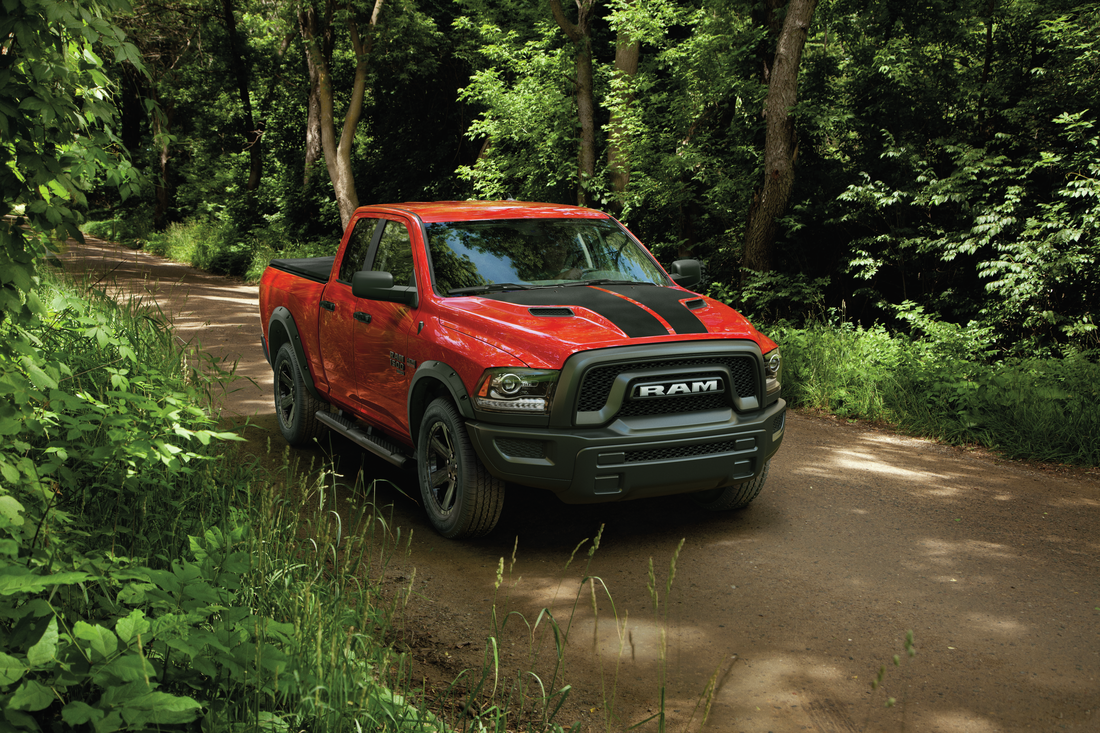
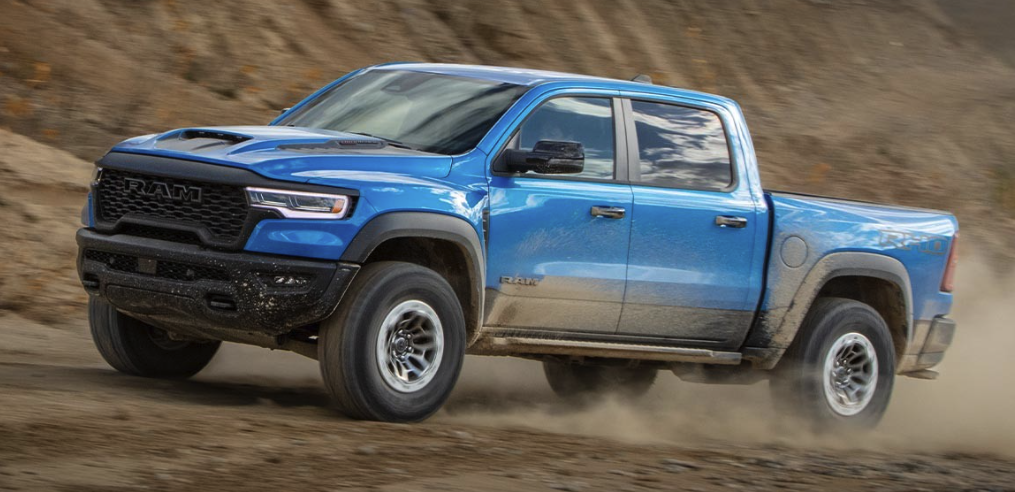
The Rebel combines genuine off-road capability with strong towing performance. The Class-Exclusive Active-Level 4-Corner Air Suspension raises for off-road use and lowers for towing — improving aerodynamics and stability under trailer load. The electronic rear axle E-Locker provides traction at boat launches, muddy construction sites, and snow-covered access roads. Despite its off-road configuration, the Rebel maintains solid towing numbers. For more on the Rebel specifically, see our Ram 1500 Rebel vs Sport comparison.
Limited / Longhorn
Ram's luxury tier delivers maximum comfort and technology while maintaining full towing capability when properly configured. The Limited's monochromatic styling and premium interior, and the Longhorn's Western-inspired leather and badging, prove that luxury and capability are not mutually exclusive. Note that options-heavy luxury trims carry additional weight that reduces available payload — choose your configuration carefully.
| Trim Level | Primary Focus | Key Towing Feature | Best For |
|---|---|---|---|
| Tradesman | Work capability | Maximum capacity, minimal cost | Contractors, fleet buyers |
| Big Horn / Lone Star | Value balance | Strong towing with added comfort | Family hauling, recreation |
| Laramie | Premium comfort | Luxury meets full capability | Business and pleasure |
| Rebel | Off-road performance | Air suspension, E-Locker, all-terrain tires | Adventure seekers, rough access towing |
| Limited / Longhorn | Ultimate luxury | Premium features with full capability | Luxury truck buyers who tow |
2026 Ram 1500 Payload Specifications
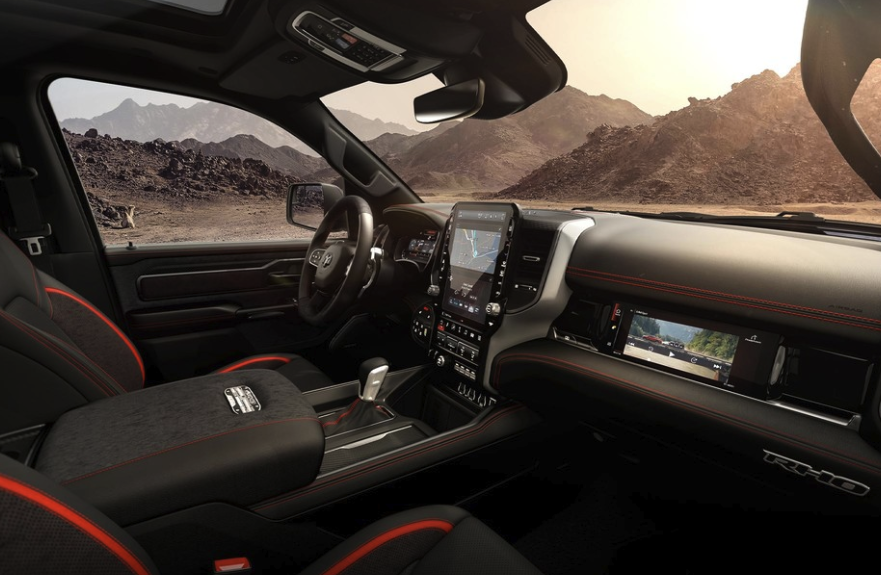
While towing gets the headlines, payload capacity is often what limits what Canadian truck owners can actually do day-to-day.
Maximum Payload by Configuration
The 2026 Ram 1500 reaches a maximum payload of 2,360 lbs (1,070 kg) in its most capable configuration. Your actual payload rating depends on cab style, bed length, engine, and drivetrain. To maximize payload, choose a Regular Cab with an 8-foot bed and 4×2 drivetrain. However, most buyers need to balance payload with passenger capacity and other practical needs.
Always confirm your exact payload on the door jamb sticker of your specific truck — options, accessories, and packages all affect the number, and the sticker reflects your truck's precise configuration.
| Configuration | Cab Style | Bed Length | Drivetrain | Payload Capacity |
|---|---|---|---|---|
| Maximum Capacity | Regular Cab | 8 feet | 4×2 | 2,360 lbs (1,070 kg) |
| Quad Cab Standard | Quad Cab | 6'4" | 4×2 | 2,100 lbs (953 kg) |
| Crew Cab Standard | Crew Cab | 5'7" | 4×2 | 1,920 lbs (871 kg) |
| Crew Cab 4×4 | Crew Cab | 6'4" | 4×4 | 1,780 lbs (807 kg) |
| Luxury Trim 4×4 | Crew Cab | 5'7" | 4×4 | 1,650 lbs (748 kg) |
How Cab Style Affects Payload
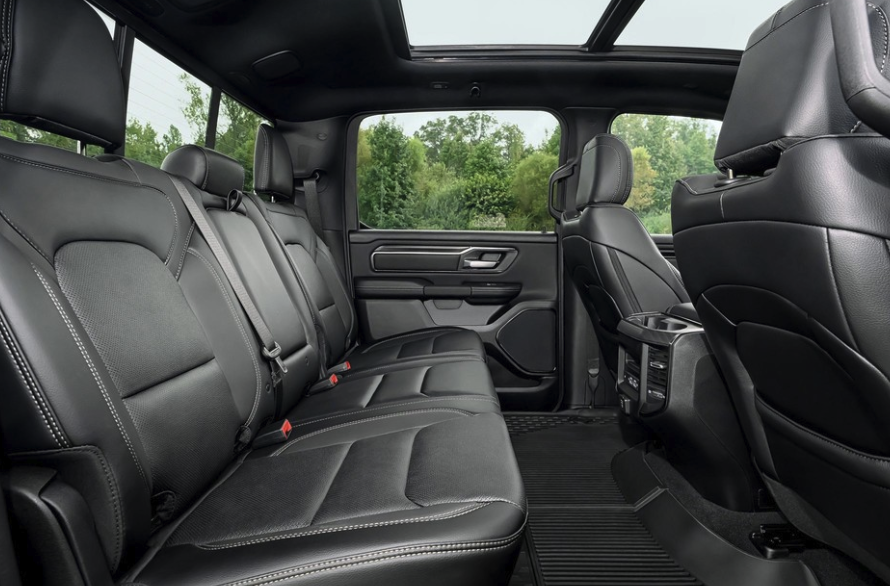
Larger cabs weigh more, which directly reduces available payload. Regular Cabs are lightest and offer the highest payload ratings. Quad Cabs typically carry 200–300 lbs less than Regular Cabs. Crew Cabs — the most comfortable and popular choice — carry 400–500 lbs less than Regular Cabs.
For work crews in St. Albert and Edmonton, the Crew Cab often makes sense: passenger comfort and easy access to rear seating for your team, while still maintaining strong enough payload for tools and materials.
How Bed Length Affects Payload
The Ram 1500 is available in three bed lengths — 5'7", 6'4", and 8 feet — each with different implications for payload and cargo flexibility.
The 5'7" bed is well-suited for city driving and tight parking, but has the lowest payload ratings and limits cargo length. The 6'4" bed is the most popular option, balancing cargo space with everyday drivability — most standard building materials fit without overhang. The 8-foot bed offers the highest payload ratings and maximum cargo versatility. Contractors hauling plywood, drywall, or lumber, and outdoor enthusiasts transporting ATVs or snowmobiles, consistently find the 8-foot bed the most practical choice despite its longer overall length.
Key Factors That Affect Your Ram 1500 Towing and Payload
4×2 vs 4×4 Drivetrain
Four-wheel drive adds approximately 90–113 kg (200–250 lbs) to your truck — weight from the front differential, transfer case, and additional driveline components. This directly reduces available payload by the same amount and can slightly lower towing ratings on certain configurations.
For most Alberta drivers, the 4×4 capability is well worth the modest capacity reduction. Winter conditions, unpaved roads, and rough access routes make AWD traction valuable year-round. If you tow exclusively on paved highways and don't need off-road traction, a 4×2 model offers marginally higher numbers.
Axle Ratio
Axle ratio is one of the most impactful — and most overlooked — factors in towing capacity. Common ratios include 3.21, 3.55, and 3.92.
A 3.92 rear axle ratio provides the best towing capacity and acceleration under load. It multiplies engine torque more effectively, making heavy trailer towing noticeably easier. The trade-off is slightly reduced fuel economy when driving unloaded at highway speeds. A 3.21 ratio improves fuel efficiency for unloaded daily driving but can reduce maximum towing ratings by thousands of pounds. For drivers who tow frequently or haul heavy loads, the higher axle ratio is essential — not optional.
Added Options and Accessories
Every option you add to your truck adds weight. Running boards, bedliners, tonneau covers, and luxury packages all reduce available payload. A fully-optioned Limited trim can weigh 230–320 kg (500–700 lbs) more than a base Tradesman. The towing capacity rating stays the same, but your ability to simultaneously carry payload while towing is reduced. Prioritize the options that matter most and calculate your actual loaded weight before finalizing your configuration.
Achieving Maximum Towing: The Optimal Configuration
Reaching the Ram 1500's peak towing rating of 11,320 lbs (5,134 kg) requires a specific combination of choices. Not every Ram 1500 reaches this number — here's what it takes:
| Configuration Element | Required Specification | Impact on Capacity |
|---|---|---|
| Engine | 5.7L HEMI V8 | 395 hp and 410 lb-ft torque — the only engine that reaches the max rating |
| Cab Style | Regular Cab or Quad Cab | Reduces vehicle weight by 90–180 kg vs Crew Cab |
| Drivetrain | 4×2 (Rear-Wheel Drive) | Lighter than 4×4, increases capacity by 180–270 kg |
| Axle Ratio | 3.92 Rear Axle | Optimizes torque multiplication for maximum pulling power |
| Bed Length | 8-foot bed | Provides better weight distribution and payload balance |
| Towing Package | Max Towing Package | Includes transmission cooling, hitch receiver, and brake controller |
The Max Towing Package is non-negotiable for reaching peak ratings. It includes upgraded cooling for the engine and transmission, a Class IV hitch receiver, factory-installed trailer brake controller, and trailer sway control. Without it, your towing capacity is meaningfully lower regardless of engine choice.
Real-World Towing Applications in Alberta
Travel Trailers and Campers
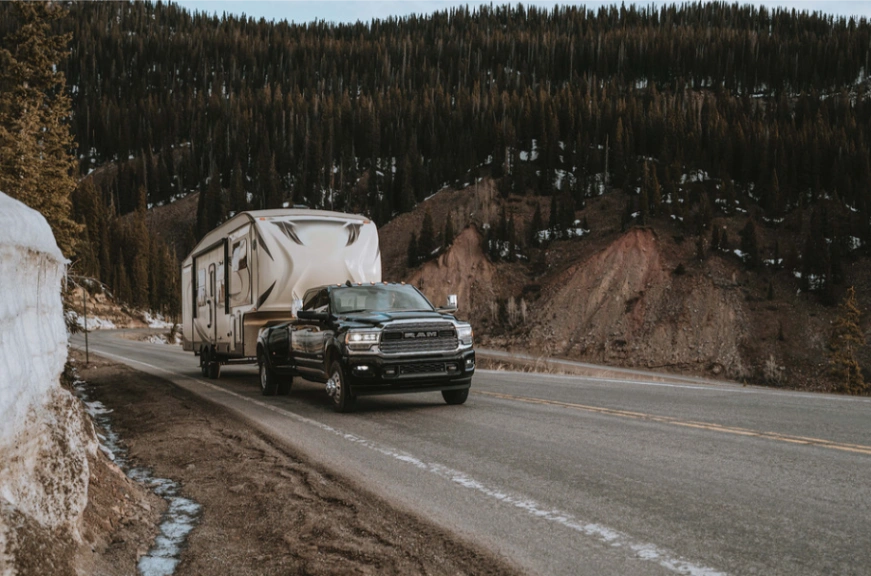
Travel trailers in the 5,000–8,000 lb range — the most common in Canada — are well within the Ram 1500's capability across most engine options. Larger fifth-wheel trailers in the 8,000–10,000 lb range require the HEMI V8 or EcoDiesel with the Max Towing Package. Always apply a 10–15% safety buffer below your rated maximum to account for water, propane, gear, and variable loads. Mountain driving through the Rockies demands that buffer be treated as mandatory, not optional.
Work Equipment and Construction Materials
Alberta contractors rely on the Ram 1500's payload for hauling daily. Common work loads and their approximate weights:
- Full sheets of drywall (50–60 sheets): approximately 820–1,000 kg (1,800–2,200 lbs)
- Roofing shingles (3 squares): roughly 340–410 kg (750–900 lbs)
- Concrete bags (40 bags): approximately 725 kg (1,600 lbs)
- Landscaping soil, mulch, or stone (1 cubic yard): approximately 900 kg (2,000 lbs)
Boats and Watercraft
Aluminum fishing boats with trailers typically weigh 680–1,360 kg (1,500–3,000 lbs) — easily within most Ram 1500 configurations. Ski and wake boats with trailers and gear run 2,040–2,950 kg (4,500–6,500 lbs), putting them in V8 or EcoDiesel territory. Larger cabin cruisers in the 22–24 foot range with trailer and gear can exceed 4,000 kg (8,800 lbs) — the Max Towing configuration is required, and proper weight-distribution hitch equipment is essential.
Horse Trailers and Livestock
Alberta's agricultural community depends on consistent towing performance for livestock transport. A two-horse bumper-pull trailer with horses aboard typically totals 2,270–2,950 kg (5,000–6,500 lbs). Small stock trailers hauling 4–6 head of cattle can exceed 3,600 kg (8,000 lbs). The HEMI V8 or EcoDiesel with the Max Towing Package is essential for livestock hauling. Always maintain a meaningful safety buffer — animals create dynamic loads during transit that exceed what static weight figures suggest.
| Application | Typical Weight Range | Recommended Engine | Notes |
|---|---|---|---|
| Travel Trailers | 5,000–8,000 lbs (2,270–3,630 kg) | V6, V8, or EcoDiesel | Standard towing package adequate for most |
| Construction Materials | 1,500–2,400 lbs payload (680–1,090 kg) | Any engine option | Regular Cab for maximum payload |
| Ski / Wake Boats | 4,500–6,500 lbs (2,040–2,950 kg) | V8 or EcoDiesel preferred | Max Towing Package recommended |
| Horse Trailers (2-horse) | 5,000–6,500 lbs loaded (2,270–2,950 kg) | V8 or EcoDiesel | Trailer brake controller required |
Advanced Towing Technology in the 2026 Ram 1500
Trailer Sway Control
Trailer sway can develop rapidly in Alberta's crosswind conditions or when a passing truck creates a pressure wave. The Ram 1500's Trailer Sway Control monitors movement through onboard sensors and automatically adjusts braking and engine power to stabilize the trailer before sway escalates. It operates without requiring corrective steering input from the driver — a meaningful safety advantage at highway speeds.
Integrated Trailer Brake Controller
The factory-installed trailer brake controller is built directly into the truck's electronics — no aftermarket wiring or console clutter. Brake intensity is adjustable from the Uconnect touchscreen or steering wheel controls, and the proportional system shares braking load between the truck and trailer for shorter, more controlled stops and reduced wear on the Ram's brake components.
Surround View Camera System
The available 360-degree Surround View Camera provides a bird's-eye composite view of your truck and its surroundings. It's particularly valuable for hitching up — you can align the hitch ball with the trailer coupler accurately on the first try, on your own. At crowded campgrounds, busy construction sites, or tight boat launches, the full-perimeter view prevents contact with obstacles you can't see from the driver's seat.
Trailer Reverse Guidance
Backing a trailer accurately is one of the most challenging skills for truck owners at any experience level. The Trailer Reverse Guidance system displays on-screen trajectory lines that update in real time as you turn the steering wheel, showing exactly where your trailer will go before it gets there. Available configurations add steering assistance that guides the trailer along a selected path, making precise positioning into campsites, boat launches, and loading docks significantly easier.
How the Ram 1500 Compares to the Competition
| Truck Model | Max Towing Capacity | Max Payload | Available Engines |
|---|---|---|---|
| 2026 Ram 1500 | 11,320 lbs (5,134 kg) | 2,360 lbs (1,070 kg) | V6, V8, EcoDiesel, Hybrid |
| Ford F-150 | 13,500 lbs (6,123 kg) | 3,250 lbs (1,474 kg) | V6, V8, Hybrid, PowerBoost |
| Chevrolet Silverado 1500 | 13,300 lbs (6,033 kg) | 2,280 lbs (1,034 kg) | 4-Cyl Turbo, V6, V8 |
| Toyota Tundra | 12,000 lbs (5,443 kg) | 1,940 lbs (880 kg) | Twin-Turbo V6 Hybrid |
The Ram 1500's maximum towing and payload ratings are competitive within the half-ton segment. Where the Ram distinguishes itself is in the overall package: the Class-Exclusive Active-Level Four-Corner Air Suspension, the smoothest ride quality in its class, and comprehensive factory-installed towing technology that other manufacturers offer only as expensive add-ons. For buyers who tow regularly across Canada and value ride quality and technology alongside raw numbers, the Ram 1500 is a complete package.
Safe Towing Practices for Canadian Drivers
Know Your GVWR and GCWR
Two ratings govern safe operation of your loaded Ram 1500:
GVWR (Gross Vehicle Weight Rating) — the maximum your truck can weigh when fully loaded: vehicle weight, passengers, bed cargo, fuel, and trailer tongue weight combined.
GCWR (Gross Combined Weight Rating) — the maximum total weight of your loaded truck plus your loaded trailer.
Exceeding either rating compromises handling, braking, and structural integrity — and creates legal liability in Canada. To calculate your available payload, subtract your truck's curb weight from its GVWR. Always verify against the door jamb sticker for your specific vehicle.
Load Distribution
| Load Factor | Recommended Practice | Why It Matters | Common Mistake |
|---|---|---|---|
| Heavy Item Placement | Low and centred | Maintains stability and predictable handling | Stacking weight too high |
| Tongue Weight | 10–15% of trailer weight | Prevents trailer sway | Too much weight at rear of trailer |
| Side-to-Side Balance | Equal distribution | Keeps truck level and handling consistent | Loading one side heavily |
| Cargo Security | Multiple rated tie-down points | Prevents load shift during transit | Insufficient or worn straps |
Braking, Tires, and Maintenance
Heavy loads increase stopping distances and generate more heat in brake components. Use engine braking on long descents — downshifting through the Rocky Mountains or other steep terrain keeps brake temperatures in check and prevents fade. Check tire pressure before every towing trip and use the load-appropriate pressures from your owner's manual, not everyday driving pressures.
Regular maintenance intervals shorten for trucks that tow frequently. Oil changes, transmission fluid, differential fluid, and coolant all need more frequent attention when your drivetrain is working hard on a regular basis. Our service department at St. Albert Dodge can create a towing-specific maintenance schedule for your configuration.
Compare: Ram 1500 Rebel vs Sport
FAQ
What is the 2026 Ram 1500 maximum towing capacity?
What is the 2026 Ram 1500 maximum payload capacity?
What's the difference between towing capacity and payload capacity?
Which engine is best for towing with the 2026 Ram 1500?
How does cab style affect towing and payload capacity?
Does 4×4 drivetrain reduce towing or payload capacity?
What is axle ratio and how does it affect towing capacity?
What is GVWR and GCWR, and why do they matter?
What configuration do I need to achieve maximum Ram 1500 towing capacity?
Can the Ram 1500 tow a travel trailer or fifth-wheel camper?
What advanced towing technology does the 2026 Ram 1500 include?
How does the Ram 1500 compare to the Ford F-150 and Chevrolet Silverado for towing?
How do I choose the right Ram 1500 configuration for my towing needs?
Visit us at St. Albert Dodge located at 1155 St. Albert Trail, St. Albert, AB T8N7X1. Call us at 587-742-9181 for more information.