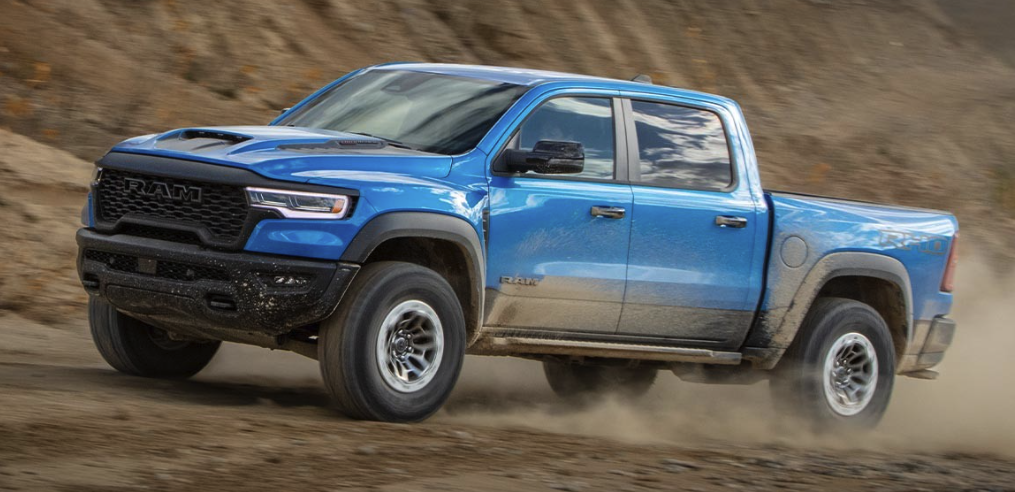
Quick Answer: 2026 Ram 1500 HEMI vs Hurricane — Which Should You Choose?
For most Canadian drivers, the Hurricane Standard Output offers the best all-around value: more horsepower (420 hp), more torque (468 lb-ft), better fuel economy, and greater payload capacity than the HEMI V8 — all for $1,200 less. However, the returning 5.7L HEMI V8 remains the right choice for long-term owners (10+ years), drivers who prioritize proven reliability, and anyone who wants that classic V8 sound and character. The Hurricane High Output is the performance leader with 540 hp but trades towing and payload for outright speed. Both engines carry Ram's industry-leading 10-year/160,000 km powertrain warranty.
Key Takeaways
- Ram brought the 5.7L HEMI V8 back for 2026 after overwhelming customer demand — over 10,000 orders placed within the first 24 hours of availability.
- The Hurricane Standard Output (420 hp) outperforms the HEMI (395 hp) in power, torque, fuel economy, and payload while costing $1,200 less.
- The Hurricane High Output delivers a class-leading 540 hp but trades towing capacity and payload for performance.
- The HEMI has decades of proven durability and simpler maintenance; the Hurricane brings modern efficiency but has limited long-term real-world data.
- All three engines pair with the same 8-speed automatic transmission and carry identical 10-year/160,000 km powertrain warranty coverage.
- Cold-weather testing was completed for both engines to ensure reliable performance in Alberta winters.
- St. Albert Dodge offers back-to-back test drives of both powertrains — call 587-742-9181 to book yours.
What happens when a legendary automaker admits they made a mistake and brings back one of the most beloved engines in truck history?
We're witnessing exactly that scenario unfold right here in Alberta. Ram removed the iconic 5.7L HEMI V8 for the 2025 model year, replacing it with the new Hurricane twin-turbo inline-six. Canadian truck buyers weren't happy about it.
Sales dropped dramatically. CEO Tim Kuniskis acknowledged the company "screwed up" by eliminating the V8 option. The response was swift — over 10,000 customers ordered V8-powered pickups within the first 24 hours of availability.
Now, for the first time, you can choose between traditional V8 power and modern turbocharged technology in the same truck lineup. At St. Albert Dodge, we're here to help you make sense of this Ram 1500 engine comparison. Performance numbers, fuel economy, towing capacity, reliability, and cold-weather considerations — we're covering it all.
Understanding the 2026 Ram 1500 Powertrain Revolution
When Ram unveiled the 2025 lineup without the legendary HEMI V8, truck enthusiasts across Canada made their voices heard. The backlash was swift and significant. Loyal customers who had depended on the HEMI's distinctive rumble and proven reliability weren't ready to embrace change.
Ram had invested heavily in modernizing the 1500 for 2025, including a completely new electrical architecture with faster electronic modules and over-the-air update capability. The company had planned to move forward exclusively with their Hurricane twin-turbo inline-six engines, which offered impressive performance numbers and better fuel efficiency. But customer loyalty to the V8 tradition proved stronger than expected.
Ram's leadership acknowledged they had misjudged customer preferences and committed to bringing the HEMI back — though this wasn't a simple reversal. Engineers faced the challenge of adapting the older V8 engine to work seamlessly with the brand-new electrical system. Teams conducted cold-weather testing in New Zealand during the Southern Hemisphere's winter to meet production deadlines, ensuring the HEMI would perform flawlessly in harsh Canadian conditions.
The result is unprecedented: the 2026 Ram 1500 now offers four distinct engines — the base Pentastar V6, the Standard Output Hurricane, the returning HEMI V8, and the High Output Hurricane. For Alberta drivers visiting St. Albert Dodge, this means genuine choice between proven V8 heritage and cutting-edge turbocharged efficiency.
Engine Specifications Breakdown
The 2026 Ram truck engine specs reveal meaningful differences between these two power sources. Understanding these distinctions helps you choose the right engine for your needs and driving patterns.
| Specification | HEMI V8 | Hurricane SO | Hurricane HO |
|---|---|---|---|
| Displacement | 5.7 litres | 3.0 litres | 3.0 litres |
| Configuration | V8 Natural Aspiration | Inline-6 Twin-Turbo | Inline-6 Twin-Turbo |
| Horsepower | 395 hp | 420 hp | 540 hp |
| Torque | 410 lb-ft (+130 lb-ft eTorque) | 468 lb-ft | 521 lb-ft |
| Transmission | 8-Speed Automatic | 8-Speed Automatic | 8-Speed Automatic |
HEMI V8 Engine Technical Specs
The legendary HEMI V8 carries a 5.7-litre displacement with eight cylinders arranged in a V configuration. Its design allows for larger valves and better airflow, delivering power confidently across the full RPM range. For 2026, Ram's engineers updated the HEMI with a sport exhaust system that gives it that unmistakable classic V8 soundtrack, and integrated the eTorque mild-hybrid system. This belt-driven motor-generator adds 130 lb-ft of torque at startup — reducing hesitation and delivering smooth, confident acceleration from a stop. The HEMI produces 395 hp and 410 lb-ft of torque, with the eTorque boost making it feel even stronger in real-world driving. Its architecture has powered Ram trucks through tough Canadian winters and demanding work cycles for decades.
Hurricane Twin-Turbo Inline-Six Technical Specs
The Hurricane twin-turbo inline-six is a fundamentally different approach to truck power. Two turbochargers work together to reduce lag and provide strong boost across a wide RPM range. Direct fuel injection and variable valve timing optimize combustion at every load point, while advanced cooling systems keep temperatures in check even under sustained hard work.
The Standard Output version delivers 420 hp and 468 lb-ft of torque. The High Output variant pushes that to 540 hp and 521 lb-ft — numbers that rival performance vehicles in a full-size truck package. The inline-six's inherently balanced design also produces less internal friction than V-configuration engines, contributing to its efficiency advantage. Both versions use the same proven 8-speed automatic transmission as the HEMI, providing smooth shifts whether you're cruising Alberta's highways or working a job site.
Performance Capabilities: Power and Acceleration
Specs only tell part of the story on Alberta roads. How power reaches the wheels — and how it feels when you call for it — matters just as much as raw numbers. For a deeper look at how these powertrains perform, see our full Ram 1500 performance breakdown.
HEMI V8 Performance Metrics
The HEMI V8's 395 hp and 410 lb-ft may look modest next to the Hurricane's numbers, but the eTorque system transforms its real-world character. That extra 130 lb-ft at launch eliminates the hesitation of older V8s, making throttle response feel immediate and natural. The sport exhaust adds a deep, progressive V8 rumble that responds to your throttle input — a sensory experience the Hurricane simply can't replicate. Power builds linearly and predictably, making the HEMI feel intuitive for merging, passing, and towing. Cold Alberta mornings don't compromise its consistency.
Hurricane Engine Performance Metrics
The Hurricane changes the performance conversation for half-ton trucks entirely. Both variants reach 0–60 mph in under five seconds — the Standard Output in 4.9 seconds, the High Output in 4.2 seconds. That's sports-car territory in a full-size pickup. Power delivery differs from the HEMI: there's a brief moment as the turbos spool, followed by strong, sustained thrust across a wide RPM band. The Hurricane HO's acceleration once fully boosted is genuinely explosive. Some drivers love the turbo's power surge; others prefer the HEMI's instant, linear response. Both are outstanding for Alberta highway driving — it comes down to personal preference.
| Driving Characteristic | HEMI V8 | Hurricane Standard Output | Hurricane High Output |
|---|---|---|---|
| Sound Character | Deep V8 rumble, emotionally engaging | Subdued, refined turbocharged note | Sporty, responsive turbo whistle |
| Throttle Response | Immediate with eTorque assistance | Quick with minimal turbo lag | Instant, sports-car-like |
| Power Delivery | Linear, progressive build | Smooth with gradual boost surge | Aggressive, immediate thrust |
| 0–60 mph | ~6.0 seconds | 4.9 seconds | 4.2 seconds |
| Daily Driving Comfort | Confident and relaxed | Smooth and effortless | Spirited and engaging |
Towing and Payload Capacity Comparison
For Alberta drivers, towing and payload ratings often matter more than straight-line speed. These numbers determine whether the truck fits your work and recreational needs. Our dedicated Ram towing capacity guide covers the full picture across configurations.
Maximum Towing Ratings
The HEMI V8 tows between 11,320 and 11,540 lbs — strong numbers for a traditional V8. The Hurricane Standard Output matches and slightly exceeds it, ranging from 10,770 to 11,610 lbs depending on configuration. The Hurricane High Output trails at 9,990 lbs, a reflection of the heavier luxury trims it typically equips rather than an engine limitation. Keep in mind that axle ratio, cab type, bed length, and trim level all affect your specific rating — always verify the configuration you're considering.
Payload Capabilities
Payload is where the Hurricane SO stands apart. It carries up to 1,930 lbs in the bed — 180 lbs more than the HEMI's 1,750 lbs. For contractors, farmers, and commercial users hauling tools, materials, or equipment, that difference is meaningful. The Hurricane HO's 1,390 lb payload reflects its positioning in heavier luxury trims rather than any engineering weakness.
| Engine Option | Maximum Towing Capacity | Maximum Payload Capacity | Best Application |
|---|---|---|---|
| HEMI V8 | 11,320–11,540 lbs | 1,750 lbs | Balanced towing and hauling |
| Hurricane Standard Output | 10,770–11,610 lbs | 1,910–1,930 lbs | Maximum work truck capability |
| Hurricane High Output | 9,990 lbs | 1,390 lbs | Performance with moderate hauling |
Real-World Hauling Scenarios for Alberta Drivers
A 25-foot travel trailer typically weighs 5,000 to 7,000 lbs — well within reach of all three engines. Contractors moving a skid steer or excavator trailer (10,000–11,000 lbs) will find the HEMI and Hurricane SO well-suited, while the Hurricane HO approaches its limit. For fifth-wheel trailers in the 12,000–15,000 lb range, consider stepping up to a Ram 2500 or 3500. In winter conditions, it's wise to stay meaningfully below maximum ratings regardless of engine — snow, ice, and cold all affect traction and braking distances on Alberta roads.
Fuel Efficiency: HEMI vs Hurricane
With Alberta's long drives and fluctuating fuel prices, efficiency matters. The Ram 1500 fuel economy gap between these engines has real dollars-and-cents implications over time. For real-world consumption data, our Ram 1500 fuel efficiency guide goes deeper.
City and Highway Fuel Economy Ratings
The HEMI V8 returns 16 mpg city / 20 mpg highway (approximately 14.7 / 11.8 L/100km). The Hurricane Standard Output betters that at 17 city / 24 highway (13.8 / 9.8 L/100km) — a 17% highway advantage. The Hurricane High Output comes in slightly below the HEMI at 15 city / 21 highway, reflecting its performance tuning and heavier trim pairings.
| Engine Option | City (mpg / L/100km) | Highway (mpg / L/100km) | Combined (mpg / L/100km) |
|---|---|---|---|
| HEMI V8 | 16 / 14.7 | 20 / 11.8 | 18 / 13.1 |
| Hurricane SO | 17 / 13.8 | 24 / 9.8 | 19 / 12.4 |
| Hurricane HO | 15 / 15.7 | 21 / 11.2 | 17 / 13.8 |
Annual Fuel Cost Analysis for Canadian Drivers
Assuming $1.50/litre and 25,000 km driven annually, the HEMI costs approximately $4,913/year in fuel. The Hurricane SO drops that to roughly $4,650 — a saving of around $263/year, or over $1,300 across five years. At $1.70/litre, the gap widens further. The Hurricane HO costs slightly more than the HEMI at approximately $5,175/year.
Impact of Driving Conditions on Consumption
The Hurricane's twin-turbo design produces its biggest efficiency gains on the highway — where the SO's 24 mpg rating really counts for drivers commuting between St. Albert and Edmonton or making long cross-province trips. City driving narrows the gap. Cold-start idling in Alberta winters costs both engines extra fuel, though the HEMI's larger displacement makes it slightly thirstier at idle. Heavy towing increases consumption by 30–50% for both engines. Both perform best on steady highway cruising, and both lose 10–15% efficiency in winter conditions.
Reliability and Long-Term Maintenance Considerations
Your engine choice affects not just today's performance but years of ownership costs and peace of mind. When comparing HEMI vs Hurricane reliability, you're weighing proven history against modern innovation. For Alberta drivers who keep their trucks for many years or rack up high kilometres, this distinction carries real weight. Our Ram 1500 maintenance tips guide covers service requirements for both engines.
HEMI V8 Proven Track Record
The HEMI brings decades of documented durability. This engine architecture has powered hundreds of thousands of Ram trucks across millions of kilometres throughout Canada. Many HEMI-powered trucks surpass 300,000 km on nothing but routine maintenance. The engine's straightforward design means fewer complex components, wider parts availability, and service that any qualified mechanic can perform without specialized equipment. The historically reported exhaust manifold cracking concern on the 5.7L V8 is now covered under Ram's powertrain warranty — eliminating what was previously an out-of-pocket expense for some owners.
Hurricane Engine Technology and Durability Expectations
The Hurricane twin-turbo represents cutting-edge engineering, but with limited real-world long-term history. Stellantis invested heavily in developing this technology for durability, and early owner reports are positive. However, the full reliability picture will take years to emerge. Turbocharged engines generally require more attentive maintenance than naturally aspirated motors — particularly regarding oil quality and change intervals. The twin-turbo system adds components (intercoolers, wastegates, boost controls, turbochargers themselves) that have no equivalent on the HEMI. Turbocharger replacement, when eventually needed, represents a significant service expense not present in V8 ownership.
Maintenance Costs and Service Intervals
The HEMI follows familiar service schedules — regular oil changes, spark plug replacement at specified intervals, and routine inspections. Conventional or synthetic oil can be used depending on driving conditions. The Hurricane requires high-quality synthetic oil without exception, as turbos operate at extreme temperatures and depend on excellent lubrication for longevity. Oil change intervals should never be extended on the Hurricane. Long-term maintenance costs for the Hurricane will likely run higher due to its complexity.
Warranty Coverage Comparison
Ram offers identical coverage for both engines: a 3-year/36,000-mile basic limited warranty and a 10-year/160,000 km powertrain warranty — the best in class against Ford, Chevrolet, GMC, and Toyota. Both engines use the same 8-speed automatic transmission, also covered under the powertrain warranty.
| Maintenance Aspect | HEMI V8 | Hurricane Twin-Turbo |
|---|---|---|
| Track Record | Decades of proven durability with known characteristics | New technology with limited long-term data |
| Service Complexity | Straightforward, any qualified technician | More complex, turbo-specific knowledge required |
| Oil Requirements | Conventional or synthetic, standard intervals | High-quality synthetic required, strict intervals |
| Long-Term Costs | Predictable with excellent parts availability | Potentially higher due to turbo maintenance |
| Powertrain Warranty | 10 years / 160,000 km | 10 years / 160,000 km |
If you trade vehicles every four to five years, the Hurricane's unproven long-term reliability is a smaller concern. If you're a ten to fifteen year owner with high annual kilometres, the HEMI's documented durability may offer more confidence and lower total ownership costs.
Pricing and Value Proposition
When evaluating these Ram 1500 trim levels and powertrain pairings, initial cost is just the starting point. The full financial picture includes fuel, maintenance, resale, and financing over your ownership period.
Which Trims Offer Each Engine
The HEMI V8 is available on nearly all 2026 Ram 1500 trims — Tradesman, Big Horn, Rebel, Laramie, and Limited. The RHO and Tungsten are exceptions, with the RHO using the Hurricane HO exclusively. The Hurricane Standard Output comes standard in most trims, while the HO is reserved for upper configurations. On the Limited trim, the HEMI is a no-cost alternative to the Hurricane HO — a rare opportunity to choose based on preference rather than price.
Understanding the Price Premium
The HEMI costs $1,200 more than the Hurricane SO on most trims. That adds a sport exhaust system and a larger fuel tank to the package. Compared to the base Pentastar V6, the HEMI is $2,895 more, placing it as the mid-tier powertrain choice. At approximately $25–30/month on a financed purchase, the difference is modest.
| Engine Option | Price Difference | What's Included | Monthly Impact |
|---|---|---|---|
| HEMI vs Hurricane SO | $1,200 premium | Sport exhaust, larger fuel tank | ~$25–30/month |
| HEMI vs Pentastar V6 | $2,895 premium | Sport exhaust, larger fuel tank | ~$60–70/month |
| HEMI on Limited Trim | No additional cost | Alternative to Hurricane HO | No monthly difference |
Calculating True Ownership Expenses
The Hurricane SO's annual fuel savings of $260–300 mean it recoups its $1,200 price advantage over the HEMI in approximately four to five years — assuming comparable reliability and maintenance costs. If the Hurricane requires turbocharger service outside the warranty period, those fuel savings could be partially or fully erased. Buyers financing their purchase will pay approximately $45–55 more per month with the HEMI when combining the higher payment and fuel costs — a manageable difference that makes this a preference decision for most. Check current Ram lease deals to see how financing options affect your specific scenario. Our team at 1155 St. Albert Trail can calculate total ownership costs tailored to your driving patterns and term length.
2026 Ram 1500 HEMI vs Hurricane: Direct Comparison
With performance, efficiency, towing, and reliability all examined, here's the full side-by-side view that brings it all together.
Complete Specifications Showdown
| Specification | HEMI V8 | Hurricane SO | Hurricane HO |
|---|---|---|---|
| Horsepower | 395 hp | 420 hp | 540 hp |
| Torque | 410 lb-ft | 468 lb-ft | 521 lb-ft |
| Maximum Towing | 11,320 lbs | 11,610 lbs | 9,990 lbs |
| Payload Capacity | 1,750 lbs | 1,930 lbs | 1,390 lbs |
| Combined Fuel Economy | 18 mpg | 19 mpg | 17 mpg |
| Price Difference | +$1,200 vs SO | Base price | Premium |
| Warranty Coverage | 10 years / 160,000 km | 10 years / 160,000 km | 10 years / 160,000 km |
Why the HEMI V8 Stands Out
On paper the Hurricane SO wins almost every metric. But the HEMI has compelling reasons to choose it that numbers don't capture. Its decades of proven durability eliminate the uncertainty of new technology. The driving experience — that immediate throttle response, the deep V8 soundtrack, the emotional connection — is something no spec sheet quantifies. Maintenance is simpler, parts are plentiful, and any mechanic in Canada can service it. For many customers at St. Albert Dodge, the HEMI is an emotional decision made with full awareness of the trade-offs — and there's nothing wrong with that when you're investing significantly in a truck you'll live with daily.
Hurricane Twin-Turbo Benefits
For buyers who prioritize logic, the Hurricane SO is the stronger all-around choice. More power, more torque, better fuel economy, greater payload capacity, and $1,200 less to start. It matches the HEMI's towing while using less fuel under load. The HO goes further, delivering 540 hp acceleration that transforms the 1500 into something approaching a performance vehicle. Both Hurricane variants run quieter and smoother than the HEMI — an advantage for daily commuters and passengers. Modern turbocharged architecture also positions these engines better for future emissions requirements, which could influence long-term resale value.
Understanding the Trade-Offs
Every engine choice has honest downsides. The HEMI uses more fuel, carries less payload, produces less peak power, and faces an uncertain future given tightening emissions standards. The Hurricane's long-term reliability is unproven — we believe it will be durable, but real-world data will take years to accumulate. Turbocharged engines require more complex and potentially more expensive maintenance. And some drivers will find the turbocharged power delivery less intuitive, missing the HEMI's immediate, linear response. Both engines carry identical warranty coverage, giving you meaningful protection during the early years when new technology typically reveals design issues.
Which Engine Is Right for Your Needs?
Ram expects 25–40% of buyers to choose the HEMI despite the Hurricane's stronger specs — proof that this decision is deeply personal. The Hurricane SO is the best all-around choice for most buyers, but the right answer depends entirely on how you use your truck and what matters most to you.
When the HEMI V8 Makes Perfect Sense
Choose the HEMI if you plan to own your truck for 10–15 years or more. Its proven track record gives confidence at high mileage that the Hurricane simply can't match yet. Choose it if you value the V8 driving experience — the sound, the character, the emotional connection. Choose it if you do your own maintenance or rely on independent mechanics, since its conventional architecture is familiar to every technician in Alberta. Choose it if your use leans toward towing rather than hauling heavy loads in the bed, and if the traditional truck ownership experience matters to you. Simply put: if you want a V8 truck, get the HEMI. Ram brought it back because buyers like you made that preference clear.
When the Hurricane Engine Delivers Better Value
Choose the Hurricane SO if you drive 30,000+ km per year — the fuel savings compound meaningfully at high mileage. Choose it for maximum payload capability and work-truck applications where that extra 180 lbs in the bed matters. Choose it for outright acceleration performance, or if you prefer quiet, refined daily driving over traditional truck character. If you typically trade vehicles within the warranty period, the Hurricane's unproven long-term reliability is far less of a concern. The Hurricane HO is for enthusiasts who want sports-car acceleration in a truck body and plan to trade within four to five years.
Matching Engines to Your Driving Patterns
| Buyer Profile | Best Engine Choice | Primary Benefit | Key Consideration |
|---|---|---|---|
| Long-term owner (10+ years) | HEMI V8 | Proven reliability track record | Confidence for high mileage |
| High-mileage driver (30,000+ km/year) | Hurricane SO | Superior fuel economy | Meaningful annual savings |
| Commercial/work truck user | Hurricane SO | Maximum payload capacity | Best capability-efficiency balance |
| Recreational tower (occasional use) | HEMI V8 | Traditional V8 experience | Emotional satisfaction matters |
| Performance enthusiast | Hurricane HO | Sports-car acceleration | Plan to trade within warranty period |
At St. Albert Dodge, we strongly encourage test-driving both engines before deciding. Specifications can't fully capture the real-world difference between them. Browse our current Ram 1500 for sale in St. Albert selection to see available configurations, then come in and feel the difference yourself.
Visit St. Albert Dodge to Experience Both Engines
Reading specs is helpful, but nothing replaces the feel of each engine in motion. The HEMI's deep rumble and immediate throttle response are unique. The Hurricane's smooth, surging turbocharged power is equally impressive in its own way. We have both engines in stock across multiple trims so you can experience the real differences back-to-back.
Our team will set up drives in city and highway conditions, giving you time to ask questions and test different scenarios. We offer honest, personalized guidance based on your usage patterns — not a push toward whichever engine has a higher margin. Whether this is your first Ram or a replacement for a long-time favourite, we'll help you arrive at a decision you'll be confident in.
| Service | What We Offer | Your Benefit |
|---|---|---|
| Test Drives | Back-to-back comparisons of HEMI and Hurricane in similar trims | Experience real differences before deciding |
| Expert Consultation | Discussion of your usage patterns, towing needs, and priorities | Personalized recommendations for your situation |
| Inventory Selection | Extensive range of Ram 1500 configurations with both engine options | Compare multiple trucks to find your ideal combination |
| Transparent Pricing | Clear breakdown of costs, options, and long-term ownership expenses | Make informed financial decisions with complete information |
The 2026 Ram 1500 HEMI vs Hurricane decision reflects your priorities and how you use your truck. Both engines carry the same class-leading warranty. Both are proven capable on Alberta's job sites, backroads, and highways. The right answer is the one that fits your life — and we're here to help you find it.
Visit us at St. Albert Dodge located at 1155 St. Albert Trail, St. Albert, AB T8N7X1. Call us at 587-742-9181 to schedule your test drive.
FAQ
Why did Ram bring back the HEMI V8 for 2026 after removing it in 2025?
What are the horsepower and torque ratings for the HEMI V8 compared to the Hurricane engines?
Which engine offers better fuel economy for Alberta drivers?
What are the maximum towing capacities for each engine option?
How do payload capacities compare between the HEMI and Hurricane engines?
Is the HEMI V8 more reliable than the Hurricane twin-turbo engines?
How much more does the HEMI V8 cost compared to the Hurricane engines?
Which engine performs better in Canadian winter conditions?
What's the 0-60 mph acceleration time for each engine?
What maintenance differences should I expect between the HEMI and Hurricane engines?
Can I test drive both the HEMI and Hurricane engines at St. Albert Dodge?