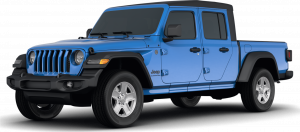
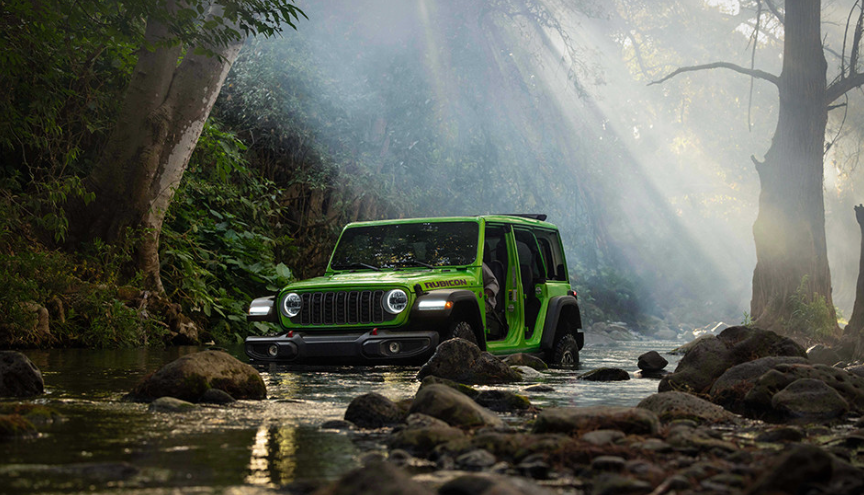
Quick Answer: How Do You Set Up a Jeep Wrangler for Camping and Overlanding?
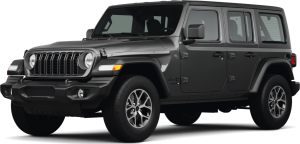
For Alberta adventurers, the Jeep Wrangler Rubicon is the best out-of-the-box overlanding platform — its solid front and rear axles, electronic sway bar disconnect, 27.7 cm (10.9") of ground clearance, and Dana 44 axles handle serious backcountry without modifications. A roof top tent, recovery kit, and dual-battery system get most drivers trail-ready for $3,000–$6,000 CAD in upgrades. The 4-door Unlimited is the practical choice for gear-heavy trips; the 2-door keeps your build lighter and more nimble. The Wrangler 4xe's 17.3 kWh battery adds silent power at camp without burning fuel. Start with the Rubicon trim, layer in the essentials, and Alberta's Forestry Trunk Road, Ghost River, and Kananaskis trails are within reach from day one.
Key Takeaways
- The Rubicon trim delivers the best factory overlanding capability: 27.7 cm ground clearance, electronic sway bar disconnect, Dana 44 axles front and rear, and a 47.4° approach angle.
- A complete starter overlanding setup — roof top tent, recovery gear, lighting, and water storage — can be built for $3,000–$6,000 CAD in aftermarket upgrades on top of your Wrangler purchase.
- The 4-door Wrangler Unlimited offers significantly more gear space and a wider range of rooftop tent options; the 2-door is better for minimalist, lightweight builds.
- Wrangler towing capacity reaches up to 1,587 kg (3,500 lbs) — enough for a small overlanding trailer or light utility trailer.
- The Wrangler 4xe's 17.3 kWh battery provides approximately 40 km of EV range and silent camp power, reducing generator dependency at your campsite.
- Alberta's Forestry Trunk Road spans over 1,100 km of gravel and backcountry access — world-class overlanding terrain accessible directly from the St. Albert area.
- St. Albert Dodge carries new Wrangler inventory across multiple trims — call 780-458-8660 to find your ideal overlanding build.
No vehicle in Canadian automotive history has earned its overlanding reputation the way the Jeep Wrangler has. From the Forestry Trunk Road west of Rocky Mountain House to the Ghost River backcountry trails less than two hours from St. Albert, Alberta offers some of the most accessible and rewarding off-pavement adventure in the country — and the Wrangler was born to cover every kilometre of it. If you're ready to explore new Jeep Wrangler inventory and turn your overlanding plans into a real build, this guide covers everything you need to know: camping setup, gear, trail safety, Alberta-specific routes, and how to match the right Wrangler to your adventure style.
What separates serious overlanders from weekend campers is usually equipment and planning — not the vehicle. The Wrangler gives you an exceptional foundation regardless of trim, but pairing it with the right upgrades and gear transforms it into a purpose-built backcountry machine. Understanding Jeep Wrangler trim levels is the first step: the differences between a Sport, Willys, Sahara, Rubicon, and 4xe are significant when you're planning long-range overland travel in Alberta's diverse terrain.
Why the Jeep Wrangler Dominates Overlanding
Most SUVs are designed around on-road comfort with some off-road capability added in. The Wrangler inverts that equation entirely. Its body-on-frame construction gives it structural strength to handle rock, ruts, and uneven trail conditions that would stress a unibody vehicle's chassis over time. Solid front and rear axles — rather than the independent suspension common in crossovers and even many truck-based SUVs — keep both wheels in contact with the ground through articulation angles that monocoque vehicles simply can't achieve.
The removable doors, folding windshield, and open-sky roof options aren't just styling choices. They're functional features that give Wrangler drivers full situational awareness on the trail — the ability to see your front wheels relative to the terrain, feel what the ground is doing, and react accordingly. For overlanders who spend time on narrow mountain tracks or technical rocky terrain, that connection to the environment is a genuine capability advantage.
The 2026 Jeep Wrangler builds on this heritage with modern technology that doesn't compromise the fundamentals. Selec-Trac and Rock-Trac 4x4 systems, up to 27.7 cm (10.9") of ground clearance on the Rubicon, and up to 76 cm (30") of water fording capability give it a technical off-road capability envelope no competitor matches at this price point in Canada.
Choosing the Right Wrangler Trim for Your Overlanding Style
Not every Wrangler leaves St. Albert for the same kind of adventure. Gravel forestry roads, dirt camping access routes, technical boulder fields, and long-range remote travel all call for different capability levels. Your trim selection sets the baseline for every upgrade decision that follows. For a deeper comparison of the performance-focused option, our Rubicon vs Wrangler comparison covers the factory off-road differences in detail.
2026 Wrangler Overlanding Capability by Trim
| Trim | Ground Clearance | Approach Angle | 4x4 System | Best For |
|---|---|---|---|---|
| Sport / Sport S | 21.1 cm (8.3") | 40.4° | Command-Trac (part-time 4WD) | Gravel roads, easy trails, beginners |
| Willys | 21.1 cm (8.3") | 40.4° | Rock-Trac (full-time 4WD, 4:1 low) | Trail-ready value builds, light technical terrain |
| Sahara | 21.6 cm (8.5") | 41.8° | Selec-Trac (full-time 4WD) | Comfort-forward builds, moderate off-road |
| Rubicon | 27.7 cm (10.9") | 47.4° | Rock-Trac (full-time 4WD, 4:1 low) | Technical terrain, rock crawling, serious overlanding |
| Wrangler 4xe | 27.7 cm (10.9") | 47.4° | Rock-Trac (4x4) + electric motors | Silent camp power, fuel savings, technical trails |
2-Door vs 4-Door for Overlanding
This decision affects every aspect of your build: gear capacity, tent compatibility, weight distribution, and maneuverability on narrow trails. Our 2-door vs 4-door Wrangler comparison covers the full breakdown. For overlanding specifically, the key trade-offs are:
The 4-door Unlimited gives you substantially more cargo space and a longer roof for larger roof top tent platforms. If you're travelling with a partner, family, or a significant gear load — fridges, water tanks, full recovery kit — the 4-door is the practical choice. The 2-door is shorter, lighter, and more nimble through tight tree-lined trails. Minimalist solo builds and photographers who prioritize access over comfort often prefer it.
Most Alberta overlanders heading out for multi-day backcountry trips choose the 4-door Unlimited. If you're doing weekend trail days with light gear, the 2-door is a compelling option.
The Essential Jeep Wrangler Camping Setup
Outfitting a Wrangler for overlanding is a process — most experienced overlanders build their kit over time based on what they actually need on trail. But there's a core set of gear that applies to nearly every overnight or multi-day Alberta backcountry trip.
Sleeping: Roof Top Tents and Ground Setups
The roof top tent (RTT) has become the signature overlanding sleep setup, and for good reason. Mounted directly to your Wrangler's roof rack, a quality RTT puts you off the ground — away from insects, wildlife, and wet terrain — and deploys in under two minutes. Ground-level tents work too, but the RTT integrates with your vehicle in a way that simplifies setup and breakdown at each camp.
For the 4-door Unlimited, RTTs in the 137–152 cm (54–60") wide range work well on most rack configurations. For the 2-door, you'll typically work with narrower platforms. Hardshell RTTs are heavier but fold flat, reducing aerodynamic drag on highway drives between trails. Softshell models are lighter and often more spacious but take slightly longer to set up.
Budget $1,200–$3,500 CAD for a quality RTT from brands like iKamper, Tepui, or ARB. Pair it with a dedicated roof rack rated for the dynamic load — many stock crossbars aren't rated for the combined weight of a tent plus occupants.
Power: Dual Battery and Solar
Extended overlanding — fridges, lighting, communication devices, charging — drains a stock vehicle electrical system quickly. A dual-battery setup (auxiliary battery in the engine bay or a lithium battery in the cargo area) is the most reliable foundation for a power system. A 100Ah lithium auxiliary battery can run a 12V compressor fridge for 2–3 days without solar input.
A 100–200W rooftop solar panel extends that range significantly on Alberta's long summer days. Add a DC-DC charger to intelligently charge your auxiliary battery while driving, and you have a self-sustaining system for multi-day trips.
Wrangler 4xe owners have a natural advantage here: the vehicle's 17.3 kWh high-voltage battery stores meaningful power that can be drawn on at camp through compatible power inverters, eliminating the need for a separate auxiliary battery in many setups.
Water Storage and Filtration
Plan for a minimum of 4 litres of drinking water per person per day in Alberta backcountry — more in summer heat or high-exertion conditions. For a 3-day solo trip, that's at least 12 litres of dedicated drinking water storage, separate from cooking and washing water.
Twenty-litre jerry cans mounted to the rear bumper or a purpose-built underbody water tank (50–100 litres) are the most common solutions on Wrangler builds. A gravity filter or UV purification device lets you refill from Alberta streams and lakes — reducing how much water you need to carry while keeping your supply potable.
Refrigeration and Food Storage
A 12V compressor fridge is the overlanding upgrade that most drivers say transforms their experience. Running consistently at 4°C regardless of ambient temperature, these units eliminate the mess and limited duration of ice coolers. Quality compressor fridges from ARB, Iceco, or Dometic run 45–75W and integrate with a dual-battery system for reliable, multi-day cold storage.
For shorter trips or budget builds, a high-quality passive cooler loaded with block ice still works — just plan to replenish ice in larger communities along the Forestry Trunk Road if your route passes through them.
Communication: Satellite Messengers for Alberta Backcountry
This is not optional on remote Alberta trails. Cellular coverage disappears within minutes of leaving pavement on most forestry roads and backcountry trails. A satellite messenger — Garmin inReach Mini 2, SPOT Gen4, or Zoleo — costs $200–$500 CAD with a subscription, and provides two-way messaging, GPS tracking, and SOS capability anywhere in the province.
Share your route with someone before leaving, check in at each planned waypoint, and carry the device on your person — not just in the truck. Alberta emergency services respond to inReach SOS signals province-wide.
| Gear Category | Recommended Item(s) | Approx. Cost (CAD) | Priority Level |
|---|---|---|---|
| Sleeping | Roof top tent + rack | $1,500–$4,500 | Essential |
| Power | Dual battery + 100W solar + DC-DC charger | $800–$2,000 | Essential for multi-day |
| Water | 20L jerry cans + gravity filter | $150–$400 | Essential |
| Refrigeration | 12V compressor fridge (40–50L) | $500–$1,200 | Highly recommended |
| Communication | Garmin inReach or equivalent | $350–$500 + subscription | Essential for remote routes |
| Navigation | Gaia GPS app + downloaded Alberta maps | $50–$100/year | Essential |
Recovery Gear: Staying Safe on Alberta Trails
Every serious overlander eventually gets stuck. Alberta's clay-heavy soils turn to axle-deep mud after rain, creek crossings can surprise you with soft bottoms, and snow lingers on shaded north-facing slopes well into June at elevation. Recovery gear isn't pessimistic — it's the difference between a minor inconvenience and a night waiting for a tow in the backcountry.
The Core Recovery Kit
| Recovery Item | What It Does | Approx. Cost (CAD) | Notes |
|---|---|---|---|
| Hi-Lift Jack | Lifts vehicle to place traction boards, change tires on uneven ground | $120–$200 | Mount externally on bumper or rack |
| Traction Boards (x2) | Escape from mud, sand, and snow | $200–$400 | MAXTRAX or equivalent |
| Kinetic Recovery Rope | Vehicle-to-vehicle recovery — stretches to reduce shock | $100–$200 | Do not use tow straps for vehicle extraction |
| Soft Shackles (x2) | Connect recovery rope to recovery points | $40–$80 | Safer than steel shackles if they fail |
| Snatch Block | Changes winch pull angle, doubles effective pull force | $60–$120 | Essential if running a winch |
| Shovel (folding) | Clear mud, create ramp, bury deadman anchor | $40–$80 | Compact folding versions work well |
| Winch (optional) | Self-recovery without a second vehicle | $700–$1,500 installed | Rubicon-spec bumpers accept winch mounting |
The Rubicon's factory rock rails and bumper design make it easier to mount a winch without modifying your front end. On Sport and Sahara trims, aftermarket bumpers with integrated winch mounts run $800–$1,800 CAD installed.
Always carry a tire repair kit with a portable compressor. Airing down your tires to 172–207 kPa (25–30 PSI) significantly improves traction and ride quality on rough trails — the Rubicon's Rock-Trac 4x4 system pairs especially well with reduced tire pressures. Re-inflate to highway pressure (typically 262–310 kPa / 38–45 PSI depending on your tire spec) before returning to pavement.
Lighting Upgrades for Night Driving and Camp
Alberta's backcountry in summer gives you long daylight hours, but dust, low-hanging branches, and wildlife crossings make supplemental lighting valuable even before dark. A quality light bar or pod light kit dramatically extends your safe driving envelope at dusk.
A 50" LED light bar mounted on the windshield frame or roof rack floods the trail ahead with up to 18,000 lumens — transforming a sketchy dusk drive into a well-lit pass. Smaller pod lights (4" cubes) mounted on the bumper or A-pillars provide spot coverage for tight technical sections.
For camp use, a string of 12V LED camp lights powered off your auxiliary battery creates a comfortable work and cooking area around your Wrangler. Budget $300–$800 CAD for a quality lighting package from brands like Baja Designs, KC HiLiTES, or Rigid Industries.
Note: British Columbia and Alberta both have regulations about auxiliary lighting on public roads. Amber-lens covers or switched-off units are required on highway driving in many jurisdictions. Know your local rules.
Towing with Your Wrangler: Trailers and Utility Hauling
The Wrangler's towing capability opens up a completely different overlanding approach — pulling a small off-road trailer with additional gear, a motorcycle, or even an ATV. Our dedicated Wrangler towing capacity guide covers configurations in full, but here are the essentials for overlanding use.
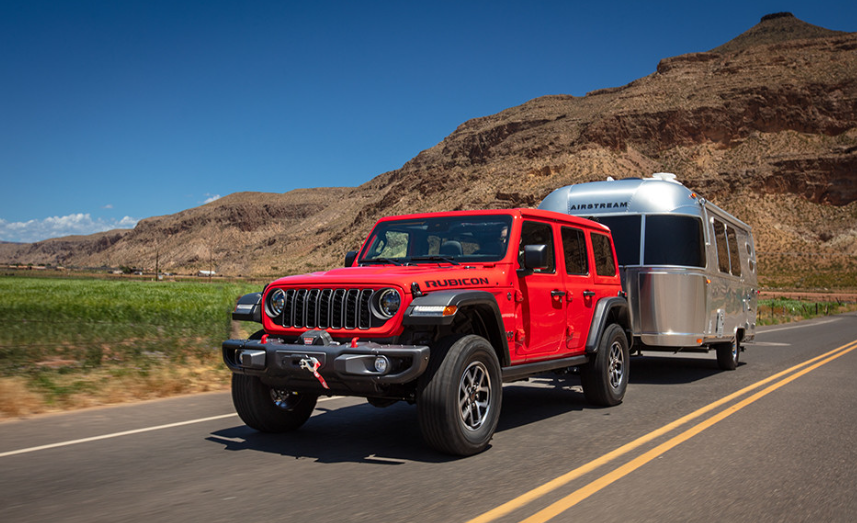
The 2026 Wrangler tows up to 1,587 kg (3,500 lbs) when properly equipped. That's enough for a small overlanding trailer (like an Opus Off-Road or Turtleback) loaded with additional gear — effectively doubling your storage capacity without adding roof weight.
Keep in mind that towing on backcountry trails changes your vehicle dynamics significantly. A trailer extending your rear overhang makes backing, reversing, and negotiating switchbacks more complex. Most overlanding trailers designed to travel off-road behind a Wrangler use an articulating hitch that allows independent movement — critical when your Wrangler's rear axle is at a different angle than the trailer.
In Alberta's mountains, towing on steep grades places additional thermal stress on transmission and brakes. Descend in a low gear rather than riding the brakes on prolonged downhill sections, and check trailer hitch ball temperatures periodically on hot days.
| Towing Scenario | Typical Weight (kg) | Wrangler Suitability | Key Consideration |
|---|---|---|---|
| Small off-road trailer (gear hauler) | 450–900 kg | Excellent | Articulating hitch for rough terrain |
| Motorcycle trailer (1 bike) | 200–400 kg | Excellent | Easiest towing scenario for Wrangler |
| Side-by-side / light UTV | 500–800 kg | Good | Stay well below max rating; check payload |
| Small boat (aluminum, no motor) | 200–500 kg | Good | Combined trailer + boat weight |
| Full-size travel trailer | 1,100–1,600 kg | Approaching limit | Consider Ram 1500 or Ram 2500 for heavy trailers |
Overlanding with the Wrangler 4xe: Silent Power at Camp
The Wrangler 4xe's hybrid powertrain brings a unique advantage to overlanding that pure internal combustion vehicles can't match: the ability to run camp electronics silently, without idling the engine, using stored battery energy. The 4xe's 17.3 kWh battery provides approximately 40 km of EV-only range on pavement — useful for fuel savings on highway drives to the trailhead — and can power 12V accessories and compatible inverters at camp without burning a drop of fuel.
For overlanders who camp in wilderness areas where engine idling is frowned upon, or who simply prefer a quieter camp experience, this is a meaningful quality-of-life improvement. Morning coffee, a running fridge, and phone charging happen silently while the rest of the camp wakes up.
The 4xe's combined output of 375 hp and 637 Nm (470 lb-ft) of torque also gives it trail performance that exceeds even the Rubicon's standard powertrain. Off the line and in technical crawling situations, the instant electric torque fills in any gaps the internal combustion engine might otherwise leave.
The 4xe starts at a higher price point than comparable non-hybrid Wrangler trims. It may qualify for federal zero-emission vehicle incentives in Canada — confirm current eligibility with our team at St. Albert Dodge, as program details and eligible vehicle lists are updated periodically by the federal government.
Top Alberta Overlanding Routes Near St. Albert
Alberta's geography is a gift to overlanders. Within two to three hours of St. Albert, drivers have access to hundreds of kilometres of maintained gravel, loose rocky two-track, river crossings, and high-elevation ridge routes. Here are the routes most commonly explored by Wrangler owners from the Edmonton area.
Forestry Trunk Road (Highway 40 / Range Road 40)
The single most significant overlanding corridor in Alberta, the Forestry Trunk Road runs over 1,100 km from the northern foothills near Grande Prairie south to Highway 3. The section between Grande Cache and Nordegg is particularly well-regarded: isolated, scenic, and dotted with free primitive camping on Crown land. The road is largely well-maintained gravel and accessible to most vehicles, but side routes and river crossings require at minimum a solid 4x4 setup. A Sport-trim Wrangler handles the main trunk; a Rubicon opens up far more side exploration.
Ghost River Wilderness and Ghost-Forestry Trunk Road
Approximately 90 minutes southwest of St. Albert, the Ghost River area offers technical trails, quad tracks, and scenic valley camping with the Canadian Rockies as a backdrop. Water crossings are common — this is where the Rubicon's 27.7 cm ground clearance and water fording capability earn their keep. Seasonal access and stream levels vary; always check Alberta Environment and Parks trail conditions before departing.
Kananaskis Country
Kananaskis Country's off-highway vehicle trail network includes hundreds of kilometres of designated routes ranging from easy gravel access roads to challenging single-track terrain. The area south of Barrier Lake and the McLean Creek OHV area are popular day-trip destinations from St. Albert. A Kananaskis Country OHV permit ($90/year or $15/day in 2026) is required for designated OHV trail use. This is Wrangler territory — every trim handles this well.
David Thompson Country (Nordegg to Icefields Parkway)
Highway 11 (the David Thompson Highway) connects Rocky Mountain House to the Icefields Parkway through some of the most dramatic landscapes in central Alberta. Side roads, ATV access routes, and primitive camping areas branch off throughout. Nordegg itself has services for resupply. This region rewards multi-day trip planning — the distance from Edmonton makes day trips marginal.
Peace River Region
For northern Alberta explorers, the region around Peace River, Fairview, and the Smoky River corridor offers open plains, river valley terrain, and forestry access roads that see far less traffic than the mountain routes. Spring break-up conditions (late March–May) make these routes impassable for all vehicles; summer and fall are optimal.
| Route | Distance from St. Albert | Terrain Difficulty | Recommended Trim | Best Season |
|---|---|---|---|---|
| Ghost River / Ghost-Forestry Trunk Road | ~90 km | Moderate–Difficult | Rubicon (crossings) | June–September |
| Kananaskis (McLean Creek OHV) | ~250 km | Easy–Moderate | Any trim | May–October |
| Forestry Trunk Road (Central) | ~200–300 km | Easy–Moderate (main road) | Sport or above | May–October |
| David Thompson / Nordegg Area | ~230 km | Easy–Moderate | Any trim | June–September |
| Peace River Corridor | ~380 km | Easy (forestry roads) | Sport or above | July–October |
Budgeting Your Wrangler Overlanding Build
Overlanding is famously easy to overspend on. Understanding Wrangler pricing in Canada is the foundation, but the build-out cost is where most newcomers underestimate. The good news: a capable, safe overlanding setup doesn't require the most expensive gear. It requires the right gear in the right order.
Tiered Build Budgets
| Build Level | What's Included | Estimated Upgrade Cost (CAD) | Best For |
|---|---|---|---|
| Starter (Weekend Warrior) | Soft-shell RTT, jerry cans, traction boards, basic recovery kit, satellite messenger | $2,500–$4,000 | Forestry roads, established campgrounds, short trips |
| Mid-Build (Trail Capable) | Hardshell RTT, dual battery + solar, 12V fridge, full recovery kit, lighting upgrade, better tires | $5,000–$10,000 | Multi-day remote travel, moderate technical trails |
| Full Overland Rig | All above + winch, long-range fuel, water tank, drawer system, suspension lift, skid plates, 37" tires | $12,000–$25,000+ | Extended remote travel, serious technical terrain |
Most experienced overlanders advise against building everything at once. A starter kit gets you on the trail learning what you actually need. After your first three or four trips, the gaps in your kit become obvious — and you spend money on the right things rather than gear that sits unused.
The Rubicon's higher starting price often saves money overall: its factory lockers, sway bar disconnect, Dana 44 axles, and skid plates would cost $4,000–$8,000 to add to a Sport trim in aftermarket upgrades.
Building Your Wrangler: Mopar Accessories and Custom Builds
One of the Wrangler's practical advantages is the breadth of Mopar factory accessories — upgrades engineered specifically for the JL platform, covered under the vehicle's warranty when installed by an authorized dealer. From factory-style roof racks and front bumpers with integrated winch mounts to all-weather floor liners and cargo management systems, Mopar accessories provide a factory-quality fit without third-party compatibility guesswork.
Our custom Jeep Wrangler builds page shows how far a Wrangler can go — fully built rigs for specific applications from weekend camping to serious rock crawling. If you want help spec'ing a Mopar accessory package on your new Wrangler purchase, ask our team — some Mopar accessories can be rolled into your financing. Check current Mopar offers for seasonal pricing on accessories and parts.
Popular Mopar overlanding accessories for the 2026 Wrangler include:
- Steel front and rear bumpers with recovery points
- Modular roof rack (low-profile and elevated configurations)
- Rock rails / side steps with skid protection
- All-weather floor mats and cargo tray liners
- Wheel and tire upgrades (available through the parts department)
- Front skid plate and gas tank skid plate
Visit St. Albert Dodge: Your Alberta Wrangler Overlanding HQ
The best overlanding build starts with the right vehicle. We carry new Jeep Wrangler inventory across multiple trims — Sport, Willys, Sahara, Rubicon, and 4xe — so you can walk the lot, compare configurations side by side, and make a decision grounded in what you actually see and feel rather than spec sheets.
Our team understands how Wranglers get used in Alberta. We're not going to push you into a trim that doesn't match your trail plans. If you have a target route, a gear list, or a budget, bring them — we'll help match the right Wrangler to your adventure goals. For Edmonton-area customers, our Edmonton Jeep dealership page provides directions and service area details.
| What We Offer | Details | Your Benefit |
|---|---|---|
| Wrangler Test Drives | Multiple trim levels available for back-to-back drives | Feel the real difference between Sport, Rubicon, and 4xe |
| Overlanding Consultation | Route-based trim recommendations, Mopar accessory guidance | Build the right rig for your specific Alberta adventures |
| Mopar Accessory Installation | Factory-fit upgrades covered under vehicle warranty | Confidence in fit, finish, and warranty coverage |
| Financing Options | Accessories can sometimes be financed with vehicle purchase | Bundle your build cost into one monthly payment |
| Service Support | Certified Jeep technicians, Mon–Fri 7AM–5PM, Sat 8AM–4PM | Pre-season inspections, trail prep, post-trip service |
The Jeep Wrangler's combination of proven off-road capability, removable body panels, modular accessory ecosystem, and decades of community knowledge makes it the most practical and enjoyable overlanding platform available in Canada today. Whether you're planning your first overnight forestry road trip or building a serious long-range overland rig for Alberta's remote backcountry, start with the right foundation.
Visit us at St. Albert Dodge, located at 1155 St. Albert Trail, St. Albert, AB T8N 7X1. Call our sales team at 780-458-8660 to check Wrangler availability or book an appointment online.
FAQ
Is the Jeep Wrangler good for overlanding in Alberta?
What is the best Jeep Wrangler trim for overlanding?
How much does it cost to build a Jeep Wrangler overlanding rig?
What overlanding routes are near Edmonton and St. Albert?
Can a Jeep Wrangler tow an overlanding trailer?
What is the Wrangler 4xe's advantage for overlanding?
What recovery gear do I need for Alberta backcountry in a Wrangler?
Should I choose a 2-door or 4-door Wrangler for overlanding?
What is the Jeep Wrangler's ground clearance and water fording depth?
Can I test drive a Jeep Wrangler at St. Albert Dodge?