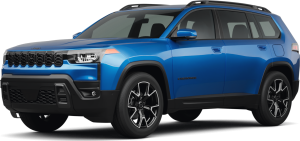
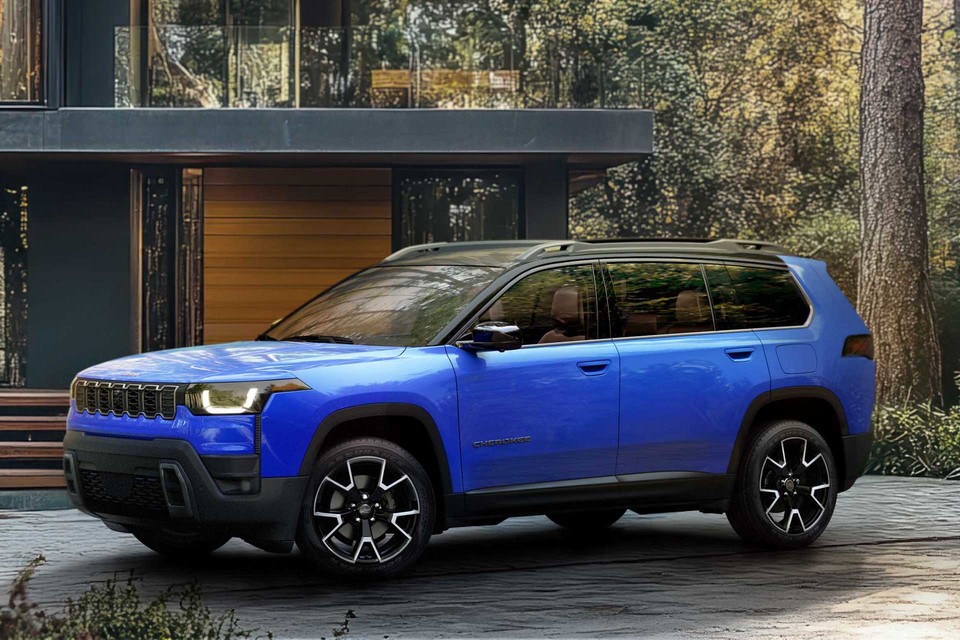
Quick Answer: 2026 Jeep Cherokee vs Toyota RAV4 — Which Should You Choose?
For Alberta drivers who prioritize proven reliability and maximum fuel savings, the RAV4 Hybrid delivers unmatched efficiency and a long track record of low-cost ownership. But for anyone who wants more power, more towing capacity, genuine off-road capability, and a more engaging drive — the 2026 Jeep Cherokee is the stronger choice. The Cherokee's 268-hp turbocharged engine outpowers every standard RAV4, its Trail Rated AWD system outperforms the RAV4 on dirt and gravel, and it tows 454 kg more. The RAV4 counters with better fuel economy, more cargo space, and Toyota's outstanding reliability reputation. Both are excellent compact SUVs — the right one comes down to how you use it.
Key Takeaways
- The 2026 Jeep Cherokee returns with a 268-hp 2.0L turbocharged engine — significantly more powerful than the RAV4's 203-hp naturally aspirated 2.5L.
- The Cherokee tows up to 2,041 kg versus the RAV4's 1,588 kg — a 454-kg advantage that matters for Alberta trailer owners.
- The RAV4 Hybrid achieves approximately 6.6 L/100km combined — considerably better than the Cherokee's 10.2 L/100km — for significant annual fuel savings.
- The Cherokee's Selec-Terrain system with Trail Rated certification gives it a meaningful off-road advantage; the RAV4 is capable but not purpose-built for the trail.
- The Cherokee 4xe plug-in hybrid offers approximately 40 km of electric range — a compelling alternative to the RAV4 Prime for Alberta drivers with home charging.
- The RAV4 leads on cargo volume (1,065 L behind the second row vs Cherokee's ~850 L) and Toyota's long-term reliability data is more established.
- Both vehicles start in the mid-$30,000 to low-$40,000 CAD range — the Cherokee at a premium — but the Cherokee's extra capability justifies the gap for many buyers.
- St. Albert Dodge offers test drives of the 2026 Jeep Cherokee in multiple trims. Call 587-742-9181 to book yours.
Two of the most popular compact SUVs on Alberta roads face off in 2026 — and the result is closer than you might expect. The 2026 Jeep Cherokee has returned with genuine momentum: a new turbocharged engine, updated technology, and the Trail Rated DNA that Toyota simply cannot match. The Toyota RAV4, meanwhile, continues its reign as Canada's best-selling SUV, backed by a reliability record that generations of owners have come to depend on.
This is a comparison that matters for Edmonton-area shoppers because the two vehicles take fundamentally different philosophies to the compact SUV category. If you're weighing your options at our St. Albert Jeep Cherokee inventory against a RAV4 at the Toyota store down the road, this guide gives you the complete picture — specs, real-world Alberta performance, fuel costs, reliability, and which buyer each vehicle truly suits.
The 2026 Compact SUV Landscape: Why This Comparison Matters
The compact SUV segment is the most competitive in Canada, and for good reason. These vehicles balance passenger space, fuel economy, all-weather capability, and affordability in a package that works equally well for Edmonton commutes, highway trips to Jasper, and weekend gravel road adventures. The Jeep Cherokee and Toyota RAV4 represent two very different answers to what a compact SUV should be.
The RAV4 has dominated Canadian sales charts for years by being deeply practical — excellent reliability, strong resale values, efficient powertrain options, and a smooth, refined driving experience. It is, for many families, the sensible choice by almost every objective measure.
The Cherokee's return for 2026 signals Jeep's commitment to competing in this space with a genuine point of view. Rather than chasing the RAV4's mainstream appeal, the Cherokee leans into Jeep's heritage — more power, better off-road credentials, more towing, and a driving character that enthusiasts actually enjoy. For drivers in northern Alberta who encounter serious winter conditions, challenging terrain, or tow regularly, that distinction is meaningful.
At St. Albert Dodge, we regularly help customers work through exactly this decision. The honest answer is that neither vehicle is objectively better — but one is almost certainly better for your specific situation. Here is what you need to know.
Engine and Powertrain Specifications
The powertrain comparison is where the Cherokee immediately establishes its performance identity. The two vehicles take completely different technical approaches to moving a compact SUV down the road.
| Specification | Cherokee 2.0T | Cherokee 4xe | RAV4 (Standard) | RAV4 Hybrid |
|---|---|---|---|---|
| Engine | 2.0L Turbo I-4 | 2.0L Turbo I-4 + Electric Motor | 2.5L NA I-4 | 2.5L I-4 + Electric Motors |
| Horsepower | 268 hp | 375 hp combined | 203 hp | 219 hp combined |
| Torque | 295 lb-ft | 257 lb-ft (+ instant electric torque) | 184 lb-ft | 163 lb-ft (+ electric torque) |
| Transmission | 8-Speed Automatic | 8-Speed Automatic | CVT | eCVT |
| Drive System | Jeep Active Drive AWD | Jeep Active Drive 4xe | Dynamic Torque Vectoring AWD | Electronic On-Demand AWD |
Cherokee 2.0L Turbocharged Engine
The Cherokee's 2.0L turbocharged inline-four is the headline story of this comparison. At 268 hp and 295 lb-ft of torque, it outpowers the standard RAV4 by 65 hp — a gap that is immediately noticeable in real-world driving. Turbocharging delivers strong, usable torque from low RPMs, making highway merges, passing manoeuvres, and uphill stretches feel effortless in a way that the RAV4's naturally aspirated engine doesn't replicate. The 8-speed automatic transmission pairs well with this engine, offering smooth, decisive shifts whether you're driving city streets in St. Albert or cruising the Yellowhead Highway.
Cherokee 4xe Plug-In Hybrid
For drivers interested in electrification without fully committing to battery-electric, the Cherokee 4xe plug-in hybrid is a compelling option. It combines the 2.0L turbocharged engine with an electric motor for 375 hp combined output — putting it in a completely different performance league than either the RAV4 or the RAV4 Hybrid. Electric range of approximately 40 km covers the average daily round-trip commute from St. Albert to Edmonton and back on battery power alone, with the gasoline engine seamlessly taking over for longer journeys. Charging at home overnight costs a fraction of filling a fuel tank.
Toyota RAV4 Powertrain Options
The RAV4's 2.5L naturally aspirated four-cylinder produces 203 hp and 184 lb-ft of torque — adequate for daily driving but noticeably less muscular than the Cherokee in demanding situations. Toyota pairs it with a CVT (continuously variable transmission) that prioritizes smoothness and efficiency over engagement. The RAV4 Hybrid adds electric motors for 219 hp combined, improving performance while dramatically cutting fuel consumption. Toyota's hybrid system has accumulated millions of real-world kilometres across multiple model generations and is widely regarded as one of the most reliable hybrid setups available.
Performance: Acceleration, Handling, and Driving Character
Specs matter — but how these vehicles feel to drive matters just as much for a vehicle you'll spend years in.
| Performance Metric | Cherokee 2.0T | Cherokee 4xe | RAV4 Standard | RAV4 Hybrid |
|---|---|---|---|---|
| 0–100 km/h | ~7.4 seconds | ~6.2 seconds | ~8.6 seconds | ~7.9 seconds |
| Power Delivery | Turbocharged surge, strong mid-range | Instant electric torque, explosive boost | Linear, smooth, predictable | Responsive off the line, electric assist |
| Transmission Feel | Decisive 8-speed automatic | Smooth 8-speed with e-motor integration | Smooth CVT, rubber-band feel at WOT | Refined eCVT, well-tuned |
| Steering Character | Direct, confident on-road feel | Direct, confidence-inspiring | Light, effortless, refined | Light and smooth |
| Daily Driving Comfort | Composed and capable | Spirited and dynamic | Exceptionally smooth and refined | Smooth with added responsiveness |
The Cherokee's turbocharged engine makes it the more engaging vehicle to drive. Power builds confidently as the turbos spool, and the 8-speed automatic complements this with gear changes that suit the driving pace. At highway speeds, the Cherokee feels planted and assured — useful on Alberta's straight, open stretches where passing opportunities require confident acceleration.
The RAV4's CVT transmission is a point of genuine divergence. In everyday driving, it's impressively smooth. But under hard acceleration — passing a semi on a two-lane road or merging onto the Whitemud Freeway — the CVT's characteristic behaviour can feel disconnected compared to the Cherokee's more traditional automatic. The RAV4 Hybrid mitigates this with electric motor assistance that improves responsiveness meaningfully.
Neither vehicle is a sports SUV, but the Cherokee offers noticeably more driving engagement for those who care about the experience behind the wheel.
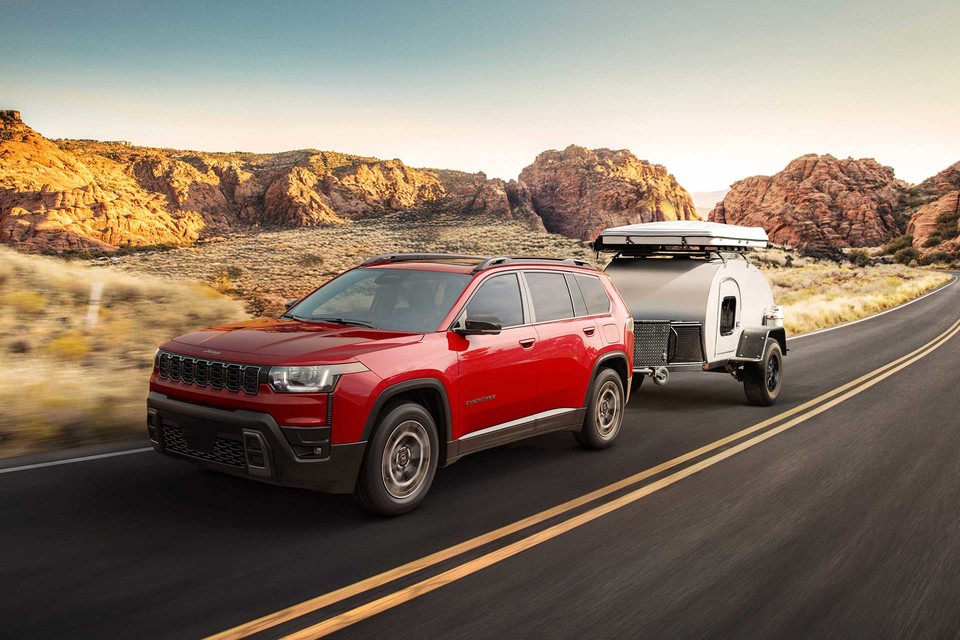
Off-Road Capability: Jeep Heritage vs Toyota Competence
This is perhaps the sharpest contrast between these two vehicles, and for many Alberta buyers it's the deciding factor.
| Off-Road Feature | Jeep Cherokee | Toyota RAV4 |
|---|---|---|
| Ground Clearance | 221 mm | 213 mm |
| AWD System | Jeep Active Drive with Selec-Terrain | Dynamic Torque Vectoring AWD |
| Terrain Modes | Auto, Snow, Sport, Rock, Sand/Mud (5 modes) | Auto, Mud & Sand, Rock & Dirt, Snow (4 modes on TRD) |
| Trail Rated | Yes (Trailhawk and select trims) | No |
| Skid Plates | Standard on off-road trims | Standard on TRD Off-Road only |
| Max Water Fording | Up to 483 mm (Trailhawk) | Not rated for water fording |
The Cherokee's Trail Rated badge isn't a marketing claim — it's a certification that requires demonstrated performance across traction, ground clearance, manoeuvrability, articulation, and water fording tests. Jeep's Selec-Terrain system with five modes (including Rock and Sand/Mud) gives the Cherokee genuine capability on surfaces where the RAV4 would struggle.
For Alberta drivers who use secondary roads, gravel forestry service roads, campsite access tracks, or farm lanes — the Cherokee's off-road advantages are real and useful. The Trailhawk trim adds skid plates, off-road-tuned suspension, and additional underbody protection that make it one of the most capable non-truck vehicles in this segment.
The RAV4 is certainly not incapable off-pavement. Toyota's Dynamic Torque Vectoring AWD system handles snow, gravel, and mild dirt roads confidently, and the TRD Off-Road trim adds terrain modes and available skid plates. But the RAV4 is not Trail Rated, does not carry a dedicated off-road heritage, and reaches its limits more quickly on genuine terrain. If your weekends involve more than paved cottage roads, the Cherokee is the clear choice.
Winter Performance in Alberta Conditions
Both vehicles handle Alberta winters well when equipped with proper winter tires — which we strongly recommend for all drivers in this region regardless of AWD system. The Cherokee's higher ground clearance and Selec-Terrain Snow mode give it an advantage in deeper accumulation, particularly on unplowed residential streets and rural routes. The RAV4 Hybrid's AWD system uses the rear electric motor to distribute torque independently, which provides genuinely excellent traction in slippery conditions. Plug-in hybrid models (both the Cherokee 4xe and RAV4 Prime) require attention in very cold temperatures to manage battery conditioning — both perform well, but consult your owner's manual for cold-weather charging guidance.
Towing and Payload Capacity
For Alberta buyers who tow — whether a small boat, a quad trailer, a utility trailer, or a light travel trailer — this comparison has a clear winner. See our dedicated 2026 Cherokee towing capacity guide for full configuration details.
| Capability | Cherokee 2.0T | Cherokee 4xe | RAV4 Standard | RAV4 Hybrid |
|---|---|---|---|---|
| Maximum Towing | 2,041 kg | 1,588 kg | 1,588 kg | 1,588 kg |
| Maximum Payload | ~454 kg | ~408 kg | ~408 kg | ~399 kg |
| Tow Package | Available on most trims | Available | Available on higher trims | Available |
The Cherokee 2.0T's 2,041-kg towing rating gives it a 454-kg advantage over the RAV4 — enough to make a meaningful real-world difference. A loaded 20-foot pontoon boat and trailer typically weighs 1,588–1,814 kg, sitting comfortably within the Cherokee's capacity and at the very limit of the RAV4's. A small utility trailer with an ATV (680–1,134 kg) is well within both vehicles' capability, but the Cherokee provides considerably more headroom for confidence.
For recreational and light commercial towing in Alberta — the kind of towing that defines daily life in this region — the Cherokee 2.0T is the practical choice. If you need to regularly approach 2,041 kg, it handles the task with reserve to spare. If your towing is occasional and rarely exceeds 1,134 kg, the RAV4's rating is sufficient.
Cargo Space and Interior Practicality
The RAV4 reclaims ground it lost on the performance and towing metrics — cargo space is a meaningful RAV4 advantage.
| Interior Metric | Jeep Cherokee | Toyota RAV4 |
|---|---|---|
| Cargo Behind 2nd Row | ~850 L | 1,065 L |
| Maximum Cargo (seats folded) | ~1,642 L | 1,977 L |
| Rear Passenger Legroom | ~1,016 mm | ~965 mm |
| Front Passenger Headroom | ~991 mm | ~1,016 mm |
| Infotainment Screen | 10.25" or 12.3" Uconnect 5 | 8" or 10.5" touchscreen |
| Wireless Apple CarPlay / Android Auto | Standard | Available (higher trims) |
The RAV4's 1,065 L of cargo space behind the rear seat is the larger space — a genuine advantage for families who regularly carry strollers, sports equipment, luggage, or shopping loads. With both rows folded, the RAV4's 1,977 L cargo floor is substantially larger. For buyers who prioritize maximum cargo versatility, the RAV4 leads.
The Cherokee's advantage shows up in rear passenger space. Rear legroom is slightly more generous, which matters on longer trips with adult passengers. The Cherokee's interior is well-appointed across the lineup, with Uconnect 5 offering one of the most intuitive and responsive infotainment experiences in any compact SUV. Wireless CarPlay and Android Auto are standard, while Toyota charges a premium for wireless integration on the RAV4.
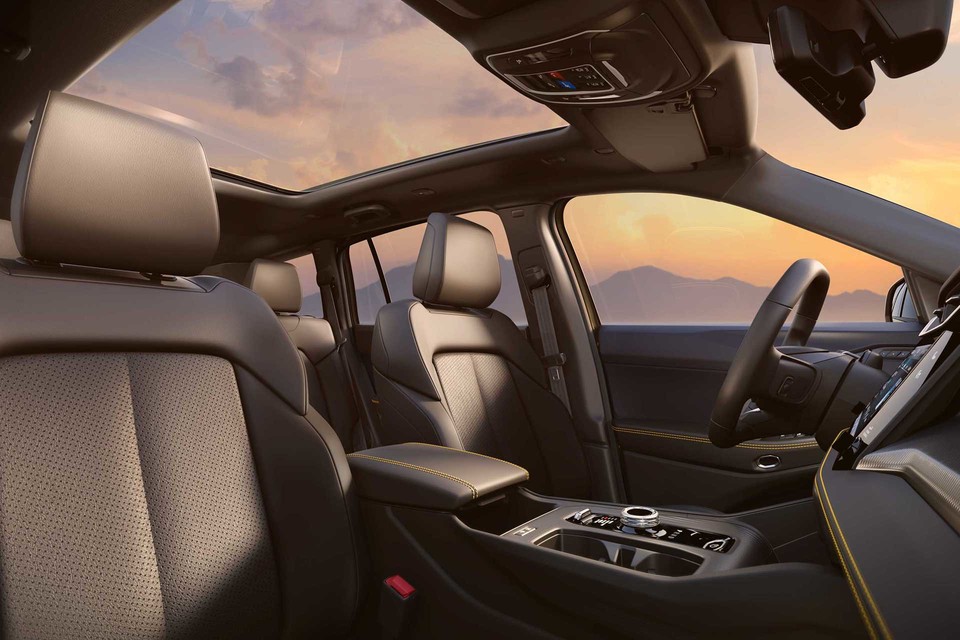
Both vehicles carry thoughtful storage throughout the cabin — door pockets, console bins, and a practical layout. The Cherokee's cabin leans toward a bolder, more design-forward aesthetic; the RAV4 prioritizes function and visibility. Neither interior is superior — they reflect different philosophies about what a compact SUV interior should feel like.
Fuel Economy: Real-World Costs for Alberta Drivers
Fuel efficiency is where the RAV4 — particularly the Hybrid — builds its strongest case.
| Engine Variant | City (L/100km) | Highway (L/100km) | Combined (L/100km) |
|---|---|---|---|
| Cherokee 2.0T AWD | 12.0 | 8.5 | 10.2 |
| Cherokee 4xe (gas only) | 10.8 | 7.9 | 9.3 |
| RAV4 Standard AWD | 10.1 | 7.9 | 9.1 |
| RAV4 Hybrid AWD | 6.4 | 6.8 | 6.6 |
Annual Fuel Cost Analysis for Alberta Drivers
Assuming $1.55/litre and 22,000 km driven annually — typical for an Edmonton-area commuter — the annual fuel cost differences are significant. The Cherokee 2.0T costs approximately $3,478/year in fuel. The RAV4 Standard AWD runs about $3,102/year — a saving of roughly $376 annually. Over five years, that's $1,880 back in the RAV4 driver's pocket. The RAV4 Hybrid drops annual fuel spend to approximately $2,249 — saving $1,229/year versus the Cherokee 2.0T, or over $6,000 across five years. At higher mileage, these numbers grow considerably.
The Cherokee 4xe dramatically changes the calculation for drivers with home charging. If you charge nightly and cover most daily driving on electricity, your fuel spend drops to the cost of electricity for commuting, with gasoline only for longer trips. Alberta's electricity rates make home charging economical, and the 4xe's 40 km electric range covers the average daily commute with ease.
The Long Commute Reality
For Edmonton-area commuters covering the St. Albert to downtown Edmonton run daily, fuel economy matters. The RAV4 Hybrid's highway efficiency at 6.8 L/100km is a compelling argument for repeat, long-distance drives. However, if you charge a Cherokee 4xe at home, your effective fuel cost for that commute approaches zero on electricity. The standard Cherokee 2.0T is the least efficient option in this comparison — a trade-off worth acknowledging for high-mileage drivers who rule out PHEV ownership.
Reliability and Long-Term Ownership
This section requires honesty, because reliability reputation is one of the RAV4's strongest cards.
Toyota RAV4: An Established Track Record
The RAV4 has earned its reliability reputation across decades and millions of vehicles. J.D. Power, Consumer Reports, and real-world Canadian owner data consistently place it among the most dependable vehicles in any segment. Toyota's hybrid system in particular has accumulated extraordinary durability data — hybrid RAV4s routinely approach and exceed 400,000 km with minimal drivetrain issues. For buyers planning to keep their vehicle ten years or more, or those who simply want the peace of mind of buying from a brand with proven longevity, the RAV4 offers exactly that.
Jeep Cherokee: A Returning Platform with Modern Engineering
The Cherokee has historically had a more mixed reliability record than Toyota. The returning 2026 model introduces updated engineering, improved build quality, and a new turbocharged engine architecture that Jeep has been refining across other models. Active safety technology has been significantly upgraded, reducing accident-related ownership costs. Early 2026 Cherokee owner reports are positive, but the honest acknowledgment is that the RAV4's longer data set provides more certainty.
That said, both vehicles carry standard warranty coverage that protects your investment:
| Warranty Type | Jeep Cherokee | Toyota RAV4 |
|---|---|---|
| Basic Warranty | 3 years / 60,000 km | 3 years / 60,000 km |
| Powertrain Warranty | 5 years / 100,000 km | 5 years / 100,000 km |
| Corrosion Warranty | 5 years / 160,000 km | 5 years / Unlimited |
| Roadside Assistance | 5 years / 100,000 km | 2 years / Unlimited |
Jeep's roadside assistance coverage — five years versus Toyota's two — is a genuine advantage for Cherokee buyers who travel or venture onto remote roads. Both warranties provide identical basic and powertrain coverage.
Maintenance Considerations
The RAV4's naturally aspirated engine follows conventional service schedules and can be serviced at virtually any independent shop in Alberta. The Cherokee's turbocharged engine requires high-quality synthetic oil and strict change intervals — turbos operate at extreme temperatures and depend on excellent lubrication. Long-term Cherokee maintenance will likely be somewhat higher than RAV4 maintenance due to turbocharger complexity. The Cherokee 4xe adds hybrid system components that require specialized service knowledge.
For drivers who do their own maintenance or prefer independent shops, the RAV4 is simpler. For drivers who service through the dealership, this distinction matters less — St. Albert Dodge's service team is fully equipped for all Cherokee powertrain variants.
Pricing and Value Comparison
Understanding the full cost picture requires looking beyond the sticker. For a detailed breakdown of Cherokee configurations and Canadian pricing, see our Cherokee pricing and trim guide.
| Model / Trim | Starting MSRP (CAD) | Key Standard Features |
|---|---|---|
| Jeep Cherokee Sport 2.0T | ~$39,000 | AWD, 10.25" Uconnect, wireless CarPlay |
| Jeep Cherokee Trailhawk | ~$46,000 | Trail Rated, skid plates, Selec-Terrain |
| Jeep Cherokee 4xe | ~$52,000 | PHEV, 40 km EV range, premium features |
| Toyota RAV4 LE AWD | ~$34,000 | AWD, 8" touchscreen, Toyota Safety Sense |
| Toyota RAV4 XLE AWD | ~$38,500 | Larger screen, sunroof, heated seats |
| Toyota RAV4 Hybrid XLE | ~$42,000 | 219 hp combined, AWD, excellent efficiency |
The Cherokee enters the market at a price premium over the base RAV4 — the RAV4 LE's entry point is approximately $5,000 lower than a base Cherokee. However, the comparison shifts when you align comparable trim levels. A well-equipped Cherokee Trailhawk compares against an upper RAV4 TRD Off-Road trim, and here the pricing gap narrows considerably while the Cherokee's capability advantage remains.
The Cherokee 4xe's premium over the RAV4 Hybrid is approximately $10,000 — significant upfront, but partially offset by federal and provincial EV incentives that may apply to plug-in hybrid vehicles in Alberta. Fuel savings for high-mileage drivers can further reduce the effective cost gap over a five-year ownership period.
On monthly financing, the Cherokee's higher sticker translates to approximately $80–$120 more per month compared to a comparably equipped RAV4 on a 72-month term. Whether that difference is justified depends entirely on how much you value the Cherokee's additional capability, power, and towing. For buyers who will actually use those features — it is. For buyers primarily focused on cost-per-kilometre efficiency, the RAV4 is the more economical choice. Visit our finance centre for current rates and personalized payment calculations.
Complete Head-to-Head Comparison
| Category | Jeep Cherokee 2.0T | Cherokee 4xe | RAV4 Standard AWD | RAV4 Hybrid AWD |
|---|---|---|---|---|
| Horsepower | 268 hp | 375 hp | 203 hp | 219 hp |
| Torque | 295 lb-ft | 257 lb-ft + electric | 184 lb-ft | 163 lb-ft + electric |
| Max Towing | 2,041 kg | 1,588 kg | 1,588 kg | 1,588 kg |
| Cargo (2nd row up) | ~850 L | ~850 L | 1,065 L | 1,065 L |
| Combined Fuel Economy | 10.2 L/100km | 9.3 L/100km* | 9.1 L/100km | 6.6 L/100km |
| Trail Rated / Off-Road | Yes (Trailhawk) | Yes | No | No |
| Ground Clearance | 221 mm | 221 mm | 213 mm | 206 mm |
| Starting Price (CAD) | ~$39,000 | ~$52,000 | ~$34,000 | ~$42,000 |
| Powertrain Warranty | 5 yr / 100,000 km | 5 yr / 100,000 km | 5 yr / 100,000 km | 5 yr / 100,000 km |
*Cherokee 4xe combined rating on gasoline only; effective cost is considerably lower for drivers who charge regularly at home.
Where the Cherokee Wins
The Cherokee's advantages are concentrated in capability: more horsepower (268 vs 203), more towing (2,041 vs 1,588 kg), better off-road credentials (Trail Rated vs no certification), more terrain modes, higher ground clearance, and a more engaging turbocharged driving character. The 4xe powertrain adds a legitimate electrified option with a performance advantage that no RAV4 variant can match. For buyers who ask more of their SUV — on the trail, on the highway passing lane, or at the hitch — the Cherokee delivers.
Where the RAV4 Wins
The RAV4's advantages are concentrated in efficiency and practicality: better fuel economy across most variants (especially the Hybrid), more cargo space behind the rear seat, Toyota's longer and more established reliability record, and a lower entry price. For buyers focused on total cost of ownership, minimizing fuel spend, maximizing cargo utility, or maximizing resale value certainty — the RAV4 holds meaningful advantages. The RAV4 Hybrid's fuel economy advantage alone justifies its consideration for any driver covering 25,000+ km per year.
Honest Acknowledgment of Trade-Offs
The Cherokee costs more upfront and uses more fuel in its base turbocharged form. Its long-term reliability, while improving, has a shorter proven track record than the RAV4. Turbocharged engine maintenance runs higher than the naturally aspirated RAV4. The RAV4's smaller engine and CVT transmission make it less exciting to drive and less capable on the trail or under load. Its off-road system is adequate but not purpose-built. Neither vehicle is perfect — both are genuinely excellent choices for different types of drivers.
Which SUV Is Right for Your Needs?
| Buyer Profile | Best Choice | Primary Reason | Key Consideration |
|---|---|---|---|
| Outdoor enthusiast / off-road driver | Cherokee Trailhawk | Trail Rated, Selec-Terrain, clearance | No off-road SUV in this class matches it |
| Regular tower (boats, trailers, ATVs) | Cherokee 2.0T | 2,041-kg tow rating | 454-kg advantage over RAV4 |
| High-mileage commuter (30,000+ km/yr) | RAV4 Hybrid | 6.6 L/100km combined | Fuel savings compound significantly |
| Family with large cargo needs | RAV4 | 1,065 L cargo, 1,977 L max | Meaningful space advantage |
| Home charging / eco-conscious driver | Cherokee 4xe | 40 km EV range, 375 hp | Best of both worlds with home charging |
| Long-term owner (10+ years) | RAV4 Hybrid | Established reliability record | Toyota's long track record provides confidence |
| Performance-oriented SUV buyer | Cherokee 4xe | 375 hp combined output | No RAV4 variant comes close on performance |
| Budget-focused buyer | RAV4 LE AWD | Lower entry price, lower fuel costs | $5,000+ less upfront, lower running costs |
If you're drawn to the Cherokee but stepping up to a larger SUV in the future is a consideration, you may also want to explore the Cherokee vs Grand Cherokee comparison to understand how Jeep's lineup scales with your needs.
The RAV4's case is strongest for drivers who prioritize cost minimization over the ownership period — particularly at high mileage. If fuel and maintenance are your dominant concerns and the RAV4's off-road capability is sufficient for your use, it's the rational choice.
The Cherokee's case is strongest for drivers who will actually use its advantages — whether that's towing, trails, power, or the 4xe's electric commuting capability. Buying capability you never use is wasteful; buying capability you need is essential.
At St. Albert Dodge, we serve drivers across the Edmonton-area who have genuinely different needs — and we'd rather help you make the right choice than push you toward the wrong one. Our team serving the Edmonton area knows this comparison well and can help you identify which vehicle fits your actual driving patterns.
Experience Both at St. Albert Dodge
Reading a comparison guide is the start of the decision — not the end. The Cherokee and RAV4 feel distinctly different to drive, and those differences matter more than any spec sheet can capture. The Cherokee's turbocharged surge, its confident AWD engagement on gravel, its willingness to work harder when you ask it — these are felt, not read.
We carry the 2026 Jeep Cherokee across multiple trims including Sport, Altitude, Trailhawk, and 4xe configurations. Our team can walk you through back-to-back test drives in city and highway conditions so you experience real-world differences rather than relying on published numbers. We provide honest, use-case-based guidance — not a push toward whichever vehicle has the best margin.
| Service | What We Offer | Your Benefit |
|---|---|---|
| Test Drives | Multiple Cherokee trims including Trailhawk and 4xe | Experience real-world differences firsthand |
| Expert Consultation | Honest discussion of your towing, commuting, and off-road needs | Personalized guidance — not a sales script |
| Inventory Selection | Range of Cherokee configurations in stock and incoming | Find your exact trim, colour, and option set |
| Financing Support | Competitive rates, payment modelling, trade-in evaluation | Full financial picture before you decide |
Whether the 2026 Jeep Cherokee is the right choice for you — or whether a different Jeep, a used option, or a different path makes more sense — we'll help you find it. Come see us at 1155 St. Albert Trail, St. Albert, AB T8N7X1, or call 587-742-9181 to schedule your appointment.
FAQ
How does the 2026 Jeep Cherokee engine compare to the Toyota RAV4?
Which has better towing capacity — the Jeep Cherokee or Toyota RAV4?
Is the Jeep Cherokee or Toyota RAV4 better for off-road driving in Alberta?
How does fuel economy compare between the Cherokee and RAV4 for Canadian drivers?
Is the 2026 Jeep Cherokee more reliable than the Toyota RAV4?
What is the price difference between the 2026 Jeep Cherokee and Toyota RAV4 in Canada?
Does the Jeep Cherokee have more cargo space than the RAV4?
How does the Cherokee 4xe compare to the RAV4 Prime plug-in hybrid?
Which SUV handles Alberta winters better — the Cherokee or the RAV4?
Can I test drive the 2026 Jeep Cherokee at St. Albert Dodge?