Quick Answer: 2026 Jeep Wrangler vs Toyota 4Runner — Which Should You Choose?
For Alberta adventurers who want the most capable off-road vehicle money can buy in this class, the 2026 Jeep Wrangler is the clear winner. Its Trail Rated credentials, 47.4-degree approach angle, removable doors and roof, and front/rear Tru-Lok locking differentials deliver off-road capability the 4Runner simply cannot match. The Wrangler also comes in at $1,395 less than the comparable 4Runner TRD Off-Road, with a larger 12.3-inch touchscreen and more standard comfort features at that price point. But if you regularly tow loads above 1,587 kg, need seven-passenger seating, or spend more time on the highway than the trail, the 4Runner's 2,268 kg tow rating, optional third row, and larger cargo area are real advantages. Both vehicles hold their value exceptionally well — the right choice comes down to how you actually use your SUV.
Key Takeaways
- The 2026 Jeep Wrangler Sahara 4-Door starts at $48,895; the comparable Toyota 4Runner TRD Off-Road starts at $50,290 — a $1,395 advantage to the Wrangler before accounting for standard features.
- The Wrangler Rubicon's 47.4-degree approach angle, 40.4-degree departure angle, and Tru-Lok front and rear locking differentials give it off-road capability the 4Runner cannot match in any configuration.
- The Wrangler's removable doors and roof panels are unique among mainstream SUVs — no other modern vehicle offers this open-air experience.
- The Toyota 4Runner tows up to 2,268 kg — 680 kg more than the Wrangler Unlimited's 1,587 kg maximum — a meaningful advantage for trailer owners.
- The Wrangler Sahara's standard 12.3-inch Uconnect 5 touchscreen significantly outclasses the 4Runner TRD Off-Road's standard 8-inch display at a lower price.
- The Wrangler 4xe plug-in hybrid offers up to 35 km of electric-only driving range and may qualify for federal iZEV incentives — an efficiency category the 4Runner has no equivalent for.
- Both vehicles retain approximately 60–70% of their value after three years, among the strongest resale figures in any automotive segment.
- St. Albert Dodge carries the full 2026 Wrangler lineup. Call 587-742-9181 to book a test drive.
Two legendary off-road SUVs. One decision. At St. Albert Dodge, we serve Alberta drivers who face exactly this choice — and we've done the honest work of laying out where each vehicle excels and where it falls short, so you can choose the right adventure partner for your specific lifestyle and driving needs. The 2026 Jeep Wrangler is Canada's benchmark off-road SUV, and you can browse current Wrangler inventory at St. Albert Dodge or visit us at 1155 St. Albert Trail, St. Albert, AB T8N7X1 to compare trims in person.
In head-to-head pricing, the 2026 Jeep Wrangler Sahara 4-Door starts at $48,895, while the comparable 2026 Toyota 4Runner TRD Off-Road starts at $50,290 — a $1,395 advantage to the Wrangler before you factor in standard features. But price is just the starting point. We'll walk you through off-road capability, interior comfort, towing, fuel economy, reliability, and long-term value to help you make a confident decision.
Questions? Call us at 587-742-9181 — our team can arrange back-to-back test drives or walk you through current inventory.
Design and Personality: Two Distinct Philosophies
Jeep Wrangler: Heritage Engineering for Maximum Open-Air Experience
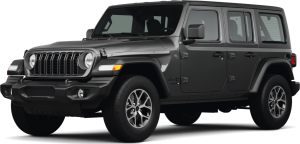
The Wrangler's seven-slot grille, round headlights, exposed hinges, and boxy profile are instantly recognisable — a design lineage that traces directly to World War II military vehicles. For 2026, the Wrangler maintains its iconic silhouette with modernised LED lighting and subtle aerodynamic refinements while keeping the defining features that enthusiasts love.
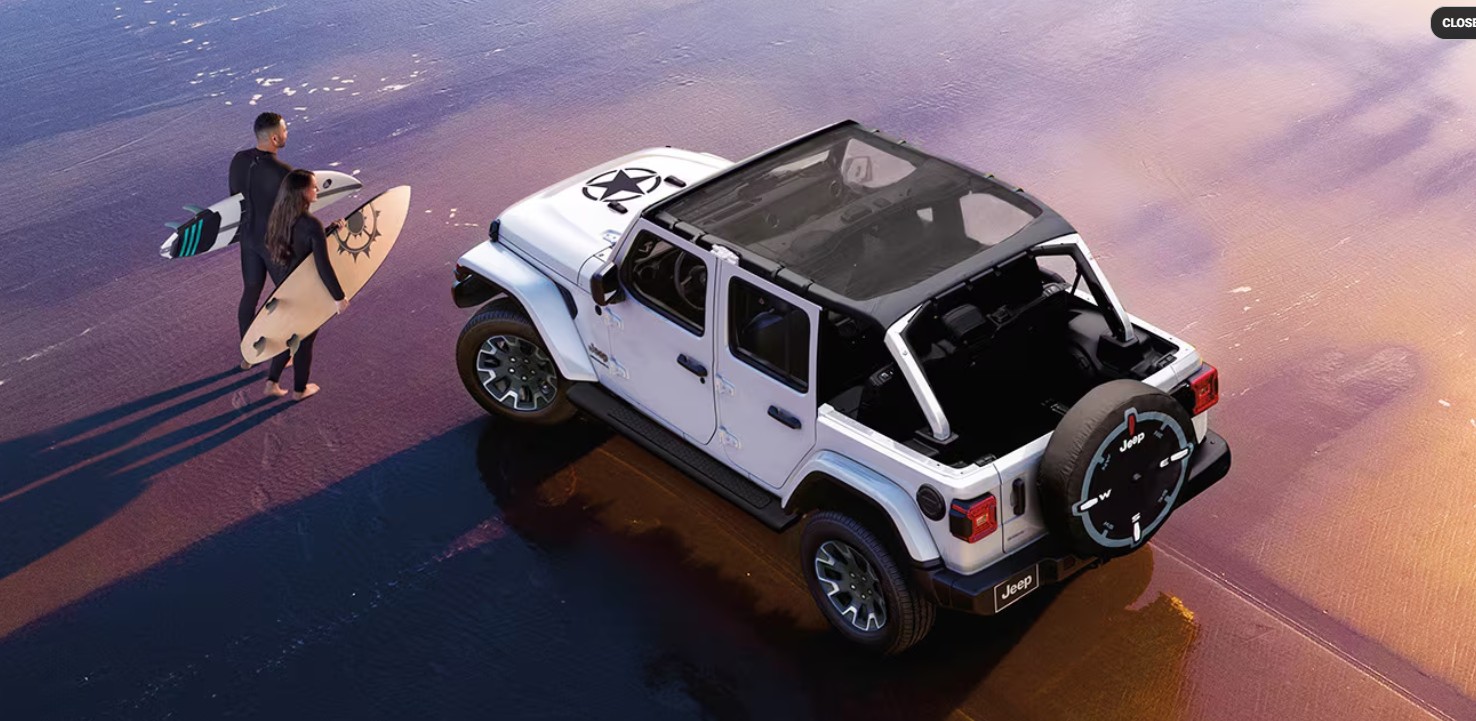
The Wrangler's most distinctive capability — and one that no other mainstream SUV offers — is its fully removable doors and roof panels. Doors come off without tools in minutes. The Sunrider soft top folds back entirely, the Freedom Top hard top panels lift off individually, and the available Sky One-Touch power top retracts with a single button press. On an Alberta summer evening on a backcountry trail, this open-air capability creates an experience simply unavailable in any other modern SUV. If you're interested in personalisation options, our custom Jeep Wrangler builds page shows what's possible.
Toyota 4Runner: Modern Ruggedness with a Traditional SUV Approach
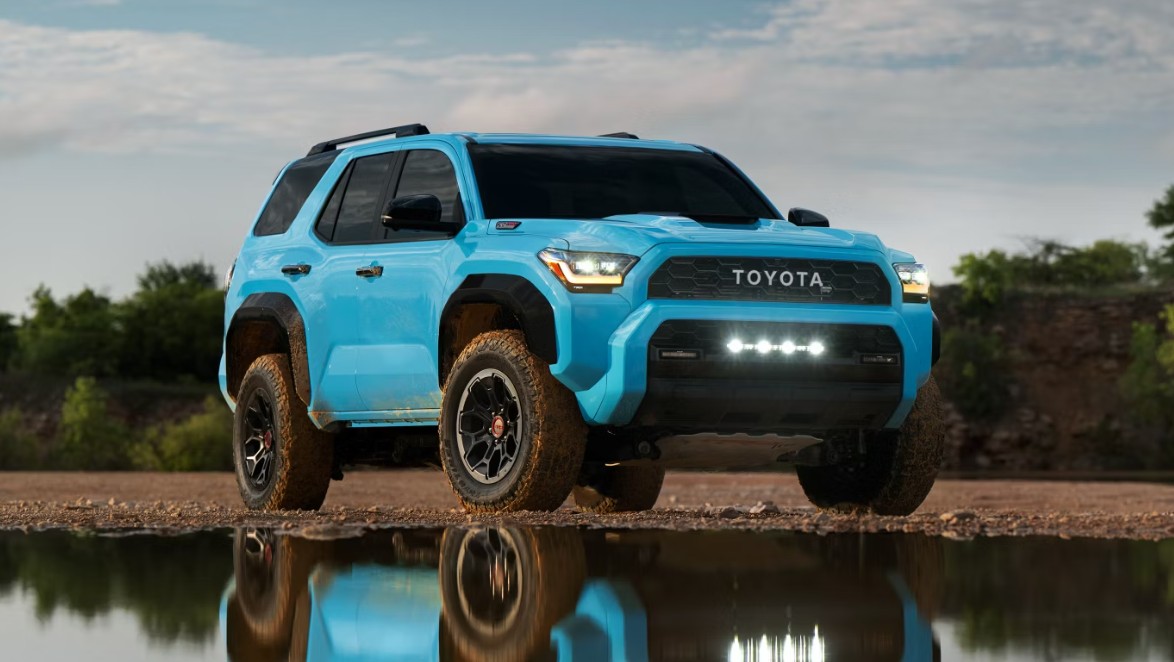
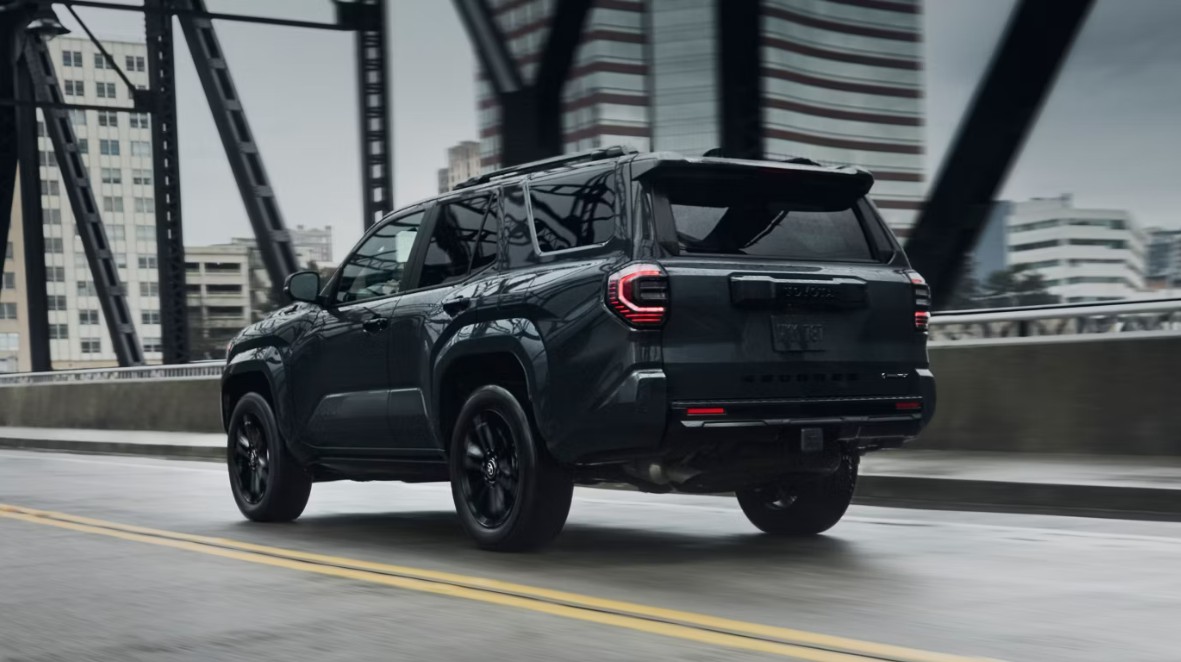
The 4Runner takes a more contemporary approach to off-road styling: a wide stance, aggressive wheel arch treatment, bold front fascia, and a multi-trim lineup that ranges from value-oriented to trail-specific to premium. The 4Runner's design conveys capable confidence without the Wrangler's overtly utilitarian aesthetic — making it more at home in an Edmonton parking garage than a Wrangler Sport.
The 4Runner's fixed, enclosed structure is simultaneously its limitation (no open-air experience) and its advantage: a sealed cabin with lower wind noise, better climate retention in winter, and no need to store removed panels. The optional third-row seating for seven passengers is exclusive to the 4Runner and addresses a genuine need for larger families.
| Design Element | Jeep Wrangler | Toyota 4Runner |
|---|---|---|
| Roof Options | Removable soft top, removable hard top panels, available Sky One-Touch power top | Fixed traditional roof; available sunroof |
| Door Configuration | Fully removable without tools; available half-doors | Fixed standard SUV doors |
| Aftermarket Support | Extensive — one of the deepest aftermarket ecosystems of any vehicle | Strong, focused on TRD functional upgrades |
| Seating | 5 passengers (standard) | 5 or 7 passengers (optional third row) |
Off-Road Capability: Where the Wrangler Pulls Away
Both the Wrangler and 4Runner are genuinely capable off-road vehicles. However, the comparison isn't close when conditions become extreme — the Wrangler's engineering advantage grows significantly on technical terrain.
Four-Wheel Drive Systems
Base Wrangler trims include the Command-Trac part-time 4×4 system with 2.72:1 low-range gearing. The Rubicon upgrades to the Rock-Trac system with a 4:1 low-range ratio and adds Tru-Lok electronic locking differentials for both front and rear axles. The Toyota 4Runner uses a proven part-time 4WD system with Multi-Terrain Select and Crawl Control on TRD variants, plus a rear locking differential — but no front locker in any configuration.
Off-Road Geometry Comparison
| Measurement | Jeep Wrangler Rubicon | Toyota 4Runner TRD | Advantage |
|---|---|---|---|
| Approach Angle | 47.4 degrees | 33 degrees | Wrangler (+14.4°) |
| Breakover Angle | 26.7 degrees | 24 degrees | Wrangler (+2.7°) |
| Departure Angle | 40.4 degrees | 26 degrees | Wrangler (+14.4°) |
| Ground Clearance | 25.4+ cm | 24.4 cm | Wrangler |
| Water Fording Depth | 76.2 cm | 68.6 cm | Wrangler |
Off-Road Verdict: Wrangler Wins Decisively
For serious technical off-roading — rock crawling, extreme approach angles, water crossings, and situations requiring both front and rear differential locking — the Wrangler Rubicon is in a different class. The 4Runner is an excellent trail vehicle for the majority of Canadian backcountry driving, but it approaches the limits of its capability sooner than the Wrangler when conditions become genuinely technical.
Interior Comfort and Cargo Space
Seating Comfort
Both SUVs accommodate five passengers as standard, but the 4Runner offers an optional third row for seven-seat capacity — an option the Wrangler cannot match. The 4Runner's more conventional SUV seating position and slightly wider interior feel more refined on long highway drives. The Wrangler's upright seating and boxier profile trade some road-trip polish for the authentic truck experience that enthusiasts value, and the 2026 generation has significantly reduced the gap in interior material quality. For a closer look at the Wrangler's cabin layout and features, see our 4-door Wrangler interior guide.
Cargo Space
The 4Runner holds a meaningful advantage in cargo volume: approximately 1,335 L behind the second row, expanding to approximately 2,540 L with seats folded. The Wrangler Unlimited offers approximately 898 L behind the rear seats and approximately 2,050 L maximum. The 4Runner's larger cargo area gives it a practical edge for families loading camping gear, hockey equipment, or weekly groceries. The Wrangler compensates with rubber floor drains — ideal for muddy boots and wet gear.
| Interior Feature | Jeep Wrangler Unlimited | Toyota 4Runner |
|---|---|---|
| Seating Capacity | 5 passengers (standard) | 5 or 7 passengers |
| Cargo Space (behind row 2) | 898 L | 1,335 L |
| Maximum Cargo Space | 2,050 L | 2,540 L |
| Heated Steering Wheel | Standard on Sahara | Requires higher trim |
| Infotainment Screen | 12.3-inch (standard on Sahara) | 8-inch (standard on TRD) |
Interior Verdict: Context Dependent
If cargo volume and seven-passenger seating matter to you, the 4Runner wins outright. If you prioritise a larger infotainment screen, more standard comfort features (heated steering wheel, remote start), and the open-air driving experience, the Wrangler delivers more value at a comparable price point.
Powertrain and Performance
The Wrangler's powertrain diversity is one of its most significant advantages in 2026. Where the 4Runner offers a single engine option across its entire lineup, the Wrangler gives you four meaningfully different choices. For a full breakdown by configuration, see our Wrangler trim levels guide.
| Powertrain | Jeep Wrangler | Toyota 4Runner |
|---|---|---|
| Base Engine | 3.6L V6 — 285 hp / 353 Nm | 4.0L V6 — 270 hp / 377 Nm |
| Turbo Option | 2.0L Turbo — 270 hp / 400 Nm | Not Available |
| High Performance | 6.4L V8 — 470 hp (Rubicon 392) | Not Available |
| Hybrid/Electric Option | 4xe PHEV — 375 hp combined; 35 km electric range | Not Available |
| Transmission | 8-speed automatic (or 6-speed manual) | 5-speed automatic |
The 4Runner's single 4.0L V6 is a known quantity — proven, durable, and uncomplicated. But it lacks the fuel efficiency of the Wrangler's turbocharged four-cylinder, the performance of the 392 V8, and the electric efficiency of the 4xe. For drivers interested in reducing their fuel costs, the Wrangler 4xe offers up to 35 km of electric-only driving for daily commuting — a feature category the 4Runner cannot touch.
On-road dynamics favour the 4Runner: its longer wheelbase provides a more planted highway ride with less body roll and lower wind noise than the Wrangler's more truck-like character. This is a genuine trade-off — the Wrangler's solid axle construction that gives it off-road superiority also affects on-road refinement. For drivers who spend most of their time on paved roads and only occasionally venture off, the 4Runner's superior highway composure is worth considering.
Towing Capacity: A Clear 4Runner Advantage
The Toyota 4Runner has a meaningful towing advantage: up to 2,268 kg when properly equipped, versus 1,587 kg maximum for the Wrangler Unlimited, and just 907 kg for two-door Wrangler models. For full Wrangler towing configuration details, see our dedicated Wrangler towing capacity guide.
| Vehicle | Max Towing Capacity | Payload | Best For |
|---|---|---|---|
| Toyota 4Runner | 2,268 kg | 653 kg | Mid-size camping trailers, larger boats, heavy equipment |
| Wrangler Unlimited (4-door) | 1,587 kg | 400–454 kg | Tent trailers, small boats, utility trailers |
| Wrangler 2-Door | 907 kg | 400–454 kg | Lightweight cargo trailers only |
If you regularly tow a loaded mid-size camping trailer, a large boat and trailer, or heavy work equipment, the 4Runner's additional 680 kg of towing capacity creates meaningful buffer — the difference between comfortable headroom and operating near your vehicle's limit. For lighter recreational towing such as a small tent trailer, PWC, or ATV trailer, both vehicles are capable.
Towing Verdict: 4Runner Wins on Capacity
If towing is a regular part of your driving life and your loads approach or exceed 1,587 kg, the 4Runner is the more capable and confident choice. For lighter and occasional towing, both SUVs are adequate and the towing advantage should not be the deciding factor.
Fuel Economy: Nearly Tied — Except for the 4xe
| Metric | Wrangler V6 | 4Runner V6 | Advantage |
|---|---|---|---|
| City | 11.8 L/100 km | 12.4 L/100 km | Wrangler |
| Highway | 10.7 L/100 km | 9.4 L/100 km | 4Runner |
| Combined | 11.2 L/100 km | 11.2 L/100 km | Tied |
| Fuel Tank | 83 L | 72 L | Wrangler (+165 km approx. range) |
On a combined basis, both SUVs deliver equivalent fuel economy at 11.2 L/100 km. The Wrangler edges ahead in city driving, while the 4Runner pulls ahead on the highway — reflecting the Wrangler's off-road-oriented aerodynamics and the 4Runner's longer, more road-optimised gearing.
The significant X-factor is the Wrangler 4xe plug-in hybrid, available in Sahara and Rubicon configurations. For drivers who charge at home daily and use their Wrangler primarily for short-distance driving around the Edmonton Capital Region, the 4xe can deliver much of its daily driving on electric power alone — reducing fuel costs dramatically and potentially qualifying for up to $5,000 through the federal iZEV programme. The 4Runner has no hybrid option of any kind, representing a meaningful long-term cost and emissions disadvantage for environmentally-conscious buyers.
Technology and Connectivity
Technology is an area where the 2026 Wrangler has a significant advantage over the 4Runner at comparable price points.
The Wrangler Sahara comes standard with a 12.3-inch Uconnect 5 touchscreen — one of the largest in any off-road-capable SUV. The 4Runner TRD Off-Road includes an 8-inch touchscreen at $1,395 more. At this screen size difference, the Wrangler's display is dramatically easier to use for navigation, audio control, and system management.
Additional Wrangler technology advantages at comparable price points include over-the-air software updates (the 4Runner requires dealer visits for software changes), remote start standard on the Sahara (requires a higher 4Runner trim), a heated steering wheel standard on the Sahara (optional on the 4Runner), ambient interior lighting standard on the Sahara (higher 4Runner trim required), and dedicated off-road information screens in Uconnect 5 showing approach/departure angles, tyre pressure, and trail data.
The Toyota 4Runner's infotainment system is functional and reliable — consistent with Toyota's mechanical quality — but it lags meaningfully behind Uconnect 5 in screen size, interface polish, and feature breadth at equivalent price points.
Reliability and Long-Term Ownership
Toyota's reputation for reliability is earned and well-documented. The 4Runner in particular has one of the strongest long-term durability records of any vehicle in Canada — regularly delivering 300,000 km or more with appropriate maintenance. Its simple, proven 4.0L V6 and five-speed transmission prioritise longevity over sophistication.
The Jeep Wrangler's reliability story has improved substantially with the JL generation (2018–present). The Pentastar V6 is a reliable engine, and Wranglers routinely deliver strong long-term ownership experiences. Common concerns are largely limited to the complexity of removable door and roof seals (water intrusion risk), electrical gremlins in higher-spec models, and the generally higher maintenance cost of Jeep-specific components versus Toyota's broader supply network.
Warranty Comparison
| Warranty Coverage | Jeep Wrangler | Toyota 4Runner |
|---|---|---|
| Basic Warranty | 3 years / 60,000 km | 3 years / 60,000 km |
| Powertrain Warranty | 5 years / 100,000 km | 5 years / 100,000 km |
| Roadside Assistance | 5 years / 100,000 km | 2 years / unlimited km |
| Corrosion Perforation | 5 years / unlimited km | 5 years / unlimited km |
Jeep's roadside assistance coverage deserves attention: five years or 100,000 km is significantly more coverage than Toyota's two-year offering — particularly valuable for Canadian drivers who venture into remote areas where roadside assistance is genuinely necessary rather than just a convenience.
Price and Value Comparison
The Wrangler's value proposition is compelling at comparable off-road specification points. For a full Canadian pricing and trim breakdown, see our Wrangler pricing guide. For payment modelling or trade-in evaluation, visit our finance centre.
| Feature Category | Wrangler Sahara ($48,895) | 4Runner TRD Off-Road ($50,290) | Value Edge |
|---|---|---|---|
| Starting Price | $48,895 | $50,290 | Wrangler saves $1,395 |
| Touchscreen Size | 12.3-inch standard | 8-inch standard | Wrangler |
| Remote Start | Standard | Requires higher trim | Wrangler |
| Heated Steering Wheel | Standard | Optional package | Wrangler |
| Open-Air Experience | Removable doors & roof | Not available | Wrangler (exclusive) |
| Hybrid Powertrain Option | 4xe PHEV available | None available | Wrangler (exclusive) |
| Max Towing Capacity | 1,587 kg | 2,268 kg | 4Runner |
| Cargo Space | 898 L behind row 2 | 1,335 L behind row 2 | 4Runner |
Resale Value: Both vehicles hold their value exceptionally well — among the best in any automotive segment. Wranglers typically retain 60–70% of their original value after three years, underpinned by strong enthusiast demand and brand loyalty. The 4Runner matches or slightly exceeds this in some markets due to Toyota's reliability reputation. Either choice is a sound long-term financial decision.
Which SUV Is Right for You?
Choose the Jeep Wrangler If…
- You want the maximum off-road capability available from any stock vehicle in Canada
- Open-air summer driving is important to you
- You want more technology and convenience features at a lower price point
- The 4xe hybrid's fuel savings and electric capability interest you
- You value a deeper aftermarket ecosystem for personalisation
- Your towing needs stay below 1,587 kg
Consider the Toyota 4Runner If…
- You regularly tow loads between 1,587 and 2,268 kg
- You need seven-passenger seating
- Maximum cargo volume is a priority for your lifestyle
- Highway refinement and low road noise matter more than extreme off-road capability
- Toyota's long-term reliability record is a primary purchase driver
For most Alberta adventurers — drivers who split time between city commuting, highway travel, and regular off-road or backcountry use — the Wrangler delivers more at a lower price. The open-air experience is exclusive, the off-road capability is unmatched, the technology package is more advanced, and the 4xe option provides a fuel-savings path unavailable in the 4Runner. The 4Runner's advantages (towing, cargo, highway comfort) are real, but narrower, and apply to a specific subset of buyer priorities.
If you're deciding between body styles, our Wrangler 2-Door vs 4-Door guide covers the trade-offs in detail.
Come See the Wrangler at St. Albert Dodge
We are a Jeep and Ram dealership — so our recommendation naturally favours the Wrangler. But we've built this comparison as honestly as we can, because our goal is to help you make a decision you'll be confident with for years. If after reading this the 4Runner's advantages matter more to your life than the Wrangler's, that's the right choice for you.
If the Wrangler is your direction, we're ready to find your perfect configuration. Whether it's a trail-ready Rubicon, a comfortable daily-driver Sahara, a fuel-efficient 4xe, or a purpose-built two-door — our inventory and order capability covers the full 2026 Wrangler range. We serve St. Albert, Edmonton, Sherwood Park, Spruce Grove, and all surrounding communities through our Edmonton-area Jeep dealership. For out-of-province buyers, Alberta's 5% GST means the trip to St. Albert is often worthwhile on tax savings alone.
Visit us at 1155 St. Albert Trail, St. Albert, AB T8N7X1, call 587-742-9181, or browse current inventory online.
Frequently Asked Questions
Which is better for off-roading in Alberta, the 2026 Jeep Wrangler or Toyota 4Runner?
The 2026 Jeep Wrangler is superior for serious off-road use, particularly in the Rubicon configuration. Its 47.4-degree approach angle, 40.4-degree departure angle, Tru-Lok electronic locking differentials on both axles, 4:1 Rock-Trac low-range gearing, and electronic sway bar disconnect combine to give it off-road capability the 4Runner cannot match. The Toyota 4Runner is capable on most Canadian trails and backcountry routes, but the Wrangler Rubicon reaches deeper into technical terrain before finding its limits. For the vast majority of Alberta's off-road destinations, both are genuinely capable; for extreme rock crawling or water crossings, the Wrangler wins.
What is the price difference between the 2026 Wrangler and 4Runner?
The 2026 Jeep Wrangler Sahara 4-Door 4×4 starts at $48,895, while the comparable 2026 Toyota 4Runner TRD Off-Road 4×4 starts at $50,290 — a $1,395 difference in the Wrangler's favour before accounting for standard features. When you factor in the Wrangler Sahara's larger 12.3-inch touchscreen, standard remote start, standard heated steering wheel, and standard ambient lighting (all of which require higher trim or option packages on the 4Runner), the Wrangler represents meaningfully better value per dollar at comparable price points.
How does the Toyota 4Runner's towing capacity compare to the Wrangler?
The Toyota 4Runner offers a maximum towing capacity of 2,268 kg when properly equipped. The Jeep Wrangler Unlimited (4-door) offers a maximum of 1,587 kg with the appropriate tow package. Two-door Wrangler models are rated at just 907 kg. If you regularly tow loads heavier than 1,600 kg — loaded mid-size camping trailers, larger boats, or heavy work trailers — the 4Runner's additional capacity provides meaningful real-world confidence and safety margin.
What is the fuel economy of the 2026 Jeep Wrangler compared to the 4Runner?
On a combined basis, both vehicles rate identically at approximately 11.2 L/100 km. The Wrangler V6 edges ahead in city driving (approximately 11.8 vs 12.4 L/100 km), while the 4Runner is better on the highway (approximately 9.4 vs 10.7 L/100 km). The Wrangler's 83-litre tank provides roughly 165 km more range per fill than the 4Runner's 72-litre tank. Critically, the Wrangler 4xe plug-in hybrid offers up to 35 km of electric-only range for daily commuting, potentially reducing annual fuel costs significantly — an efficiency option the 4Runner does not offer at all.
Which is better for Canadian winter driving in St. Albert and Edmonton?
Both SUVs handle Alberta winters well when equipped with quality winter tyres and four-wheel drive systems. The Wrangler Sahara's standard heated steering wheel is a practical advantage on cold mornings, and the 4xe hybrid's instant electric torque provides excellent traction control on slippery surfaces. The 4Runner's sealed cabin reduces wind noise and retains heat more efficiently on long winter highway drives. Both provide excellent winter capability; the Wrangler is slightly more manoeuvrable in tight urban parking situations while the 4Runner is slightly more refined on sustained winter highway driving.